
Why Is My Hair Falling Out? 10 Common Causes and Solutions
Hair fall is a common concern among men and women. Finding more hair on your pillow, comb, shower drain, or clothes can be worrying. However, hair shedding does not always indicate a serious problem. The key is to understand why your hair is falling out and identify the steps that may help.
Hair fall can occur because of genetics, stress, nutritional deficiencies, hormonal changes, thyroid problems, certain medications, and improper hair care. In many cases, addressing the underlying cause can help reduce excessive shedding and support healthy hair growth.
In this guide, we explore 10 common causes of hair fall, nutritional factors that may contribute to hair loss, practical prevention tips, and when to seek medical advice.
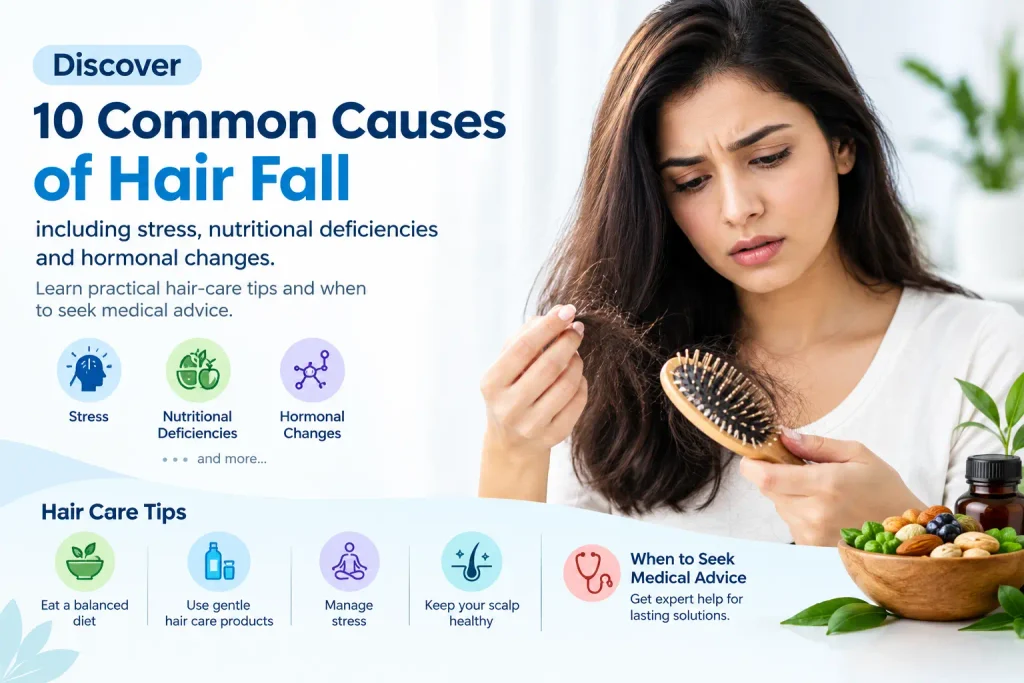
What Causes Hair Fall?
Hair naturally passes through growth, transition, resting, and shedding phases. Losing approximately 50–100 hairs daily is generally considered normal. However, persistent excessive shedding, visible thinning, or the development of bald patches may require medical evaluation.
According to the American Academy of Dermatology, hereditary hair loss, illness, stress, hormonal changes, and certain hair-care practices are among the possible causes of hair loss.
10 Common Causes of Hair Fall and Their Solutions
1. Nutritional Deficiencies
Your hair follicles need adequate nutrients to support normal growth. A diet that does not provide enough protein, iron, zinc, or certain vitamins may contribute to hair thinning or excessive shedding.
Iron deficiency is particularly important to investigate when hair fall occurs alongside fatigue, weakness, or other symptoms of anaemia. However, hair loss alone does not confirm an iron or vitamin deficiency.
What may help:
- Include protein-rich foods such as eggs, pulses, dairy products, fish, and beans.
- Eat iron-containing foods such as lentils, chickpeas, leafy greens, and meat if part of your diet.
- Include a variety of fruits, vegetables, whole grains, nuts, and seeds.
- Consult a healthcare professional about testing if a deficiency is suspected.
Avoid taking high-dose supplements without medical advice. Excessive intake of certain nutrients can actually worsen hair loss.
2. Stress and Emotional Pressure
Physical or emotional stress can disrupt the normal hair-growth cycle. Significant stress may trigger a condition called telogen effluvium, in which more hairs than usual enter the shedding phase.
Hair shedding may become noticeable a few months after a stressful event, major illness, surgery, or significant weight loss. In many cases, this type of shedding improves when the trigger resolves.
What may help:
- Maintain a consistent sleep schedule.
- Try regular physical activity, breathing exercises, or meditation.
- Eat balanced meals and avoid crash diets.
- Seek professional support if stress is persistent or overwhelming.
Remember that stress-related hair shedding may take several months to improve. Persistent or severe hair loss should not automatically be attributed to stress.
3. Hereditary Hair Loss
Genetics is one of the most common causes of gradual hair loss. Male pattern hair loss may appear as a receding hairline or thinning at the crown. Female pattern hair loss often appears as a widening part or reduced hair density.
This condition develops when genetically susceptible hair follicles gradually become smaller.
What may help:
A dermatologist can assess the pattern of hair loss and discuss evidence-based treatments. Depending on the diagnosis, options may include topical minoxidil or other clinician-recommended treatments. Results vary, and some treatments must be continued to maintain their benefits.
Early assessment can help identify suitable treatment options before significant thinning develops.
4. Hormonal Changes
Hormonal changes can affect hair growth in both men and women. Pregnancy, childbirth, menopause, and certain hormonal disorders may be associated with increased shedding or gradual thinning.
For example, some women experience noticeable hair shedding in the months after childbirth. This is often temporary, although other causes of hair loss can occur at the same time.
What may help:
- Discuss persistent hair thinning with a healthcare professional.
- Seek evaluation if hair loss occurs alongside irregular periods, acne, or other signs of hormonal changes.
- Avoid taking hormonal medicines or supplements without medical supervision.
Treating an underlying hormonal condition may help improve hair health, depending on the cause.
5. Thyroid Problems
The thyroid gland helps regulate several body functions, including metabolism. Both an underactive thyroid and an overactive thyroid can sometimes contribute to hair thinning.
Other possible symptoms include changes in weight, unusual tiredness, sensitivity to temperature, and changes in heart rate. These symptoms are not specific to thyroid disease, so testing may be necessary.
What may help:
If you experience persistent hair loss along with other possible thyroid symptoms, consult a healthcare professional. They may recommend thyroid function tests based on your symptoms and medical history.
Do not start thyroid medication or change an existing dose without medical guidance.
6. Rapid Weight Loss and Crash Dieting
Rapid weight loss, severe calorie restriction, and unbalanced diets can deprive the body of the energy and nutrients needed for normal hair growth.
People who follow extreme diets or lose a substantial amount of weight over a short period may notice increased shedding later.
What may help:
- Aim for gradual, sustainable weight management.
- Eat sufficient calories and protein for your individual needs.
- Include a range of nutrient-rich foods.
- Seek advice from a qualified dietitian if you follow a restrictive diet.
Healthy weight management should support overall health rather than compromise nutrition.
7. Excessive Heat and Chemical Hair Treatments
Frequent use of straighteners, curling irons, harsh chemical treatments, bleaching, and colouring may weaken hair shafts. This can cause breakage that looks similar to hair loss.
Repeated damage can make hair dry, brittle, and more prone to splitting.
What may help:
- Reduce the frequency of heat styling.
- Use lower heat settings when styling.
- Avoid repeated chemical treatments over short periods.
- Use a gentle shampoo and conditioner suitable for your hair.
- Handle wet hair carefully to reduce breakage.
If hair is breaking along its length, the problem may be hair-shaft damage rather than shedding from the roots.
8. Tight Hairstyles and Traction Alopecia
Tight ponytails, braids, buns, extensions, and hairstyles that repeatedly pull on the scalp can damage hair follicles. This type of hair loss is known as traction alopecia.
Early signs may include tenderness, small bumps, broken hairs, or thinning around the hairline. Continued tension can sometimes cause permanent hair loss.
What may help:
- Choose loose hairstyles that do not pull on the scalp.
- Reduce the use of heavy extensions.
- Stop hairstyles that cause pain or tightness.
- Seek medical advice if thinning or bald areas appear.
Reducing repeated tension early is important because advanced traction alopecia may not be reversible.
9. Illness, Scalp Conditions, and Certain Medications
Hair shedding may occur after a high fever, serious illness, surgery, or some medical treatments. Certain scalp conditions, including fungal infections and inflammatory disorders, can also cause hair loss.
Some medicines may have hair loss as a side effect. However, you should never stop prescribed medication on your own.
What may help:
- Tell your doctor when the shedding started and whether it followed an illness or medication change.
- Seek assessment for scalp redness, scaling, itching, pain, or bald patches.
- Follow the recommended treatment for any identified scalp condition.
- Ask your prescribing clinician whether your medication could be contributing to hair loss.
Treatment depends on the underlying condition. Some forms of hair shedding are temporary, while others require prompt treatment to prevent lasting damage.
10. Poor Hair-Care Habits
Aggressive brushing, rough towel drying, frequent heat styling, and products that irritate the scalp may contribute to breakage or scalp discomfort.
Washing your hair does not usually cause permanent hair loss. It may simply release hairs that were already in the shedding phase.
What may help:
- Use a gentle shampoo suited to your scalp.
- Condition your hair after washing.
- Detangle carefully, starting at the ends.
- Avoid vigorous rubbing with a towel.
- Stop using products that cause irritation.
Good hair-care habits can reduce avoidable breakage, but they cannot treat every underlying cause of hair loss.
Which Nutritional Deficiencies Can Contribute to Hair Loss?
Nutrition plays an important role in normal hair growth. However, supplements are most useful when they address a genuine deficiency or a specific medical need.
Iron
Iron supports the body’s production of haemoglobin, which carries oxygen in the blood. Low iron levels may be associated with hair loss in some people.
Food sources: Lentils, beans, chickpeas, leafy greens, fortified cereals, and meat.
Protein
Hair is primarily made of a protein called keratin. Insufficient protein intake can affect normal hair growth.
Food sources: Eggs, milk, yoghurt, paneer, fish, lean meat, soy, beans, and lentils.
Zinc
Zinc is involved in normal cell growth and tissue repair. Zinc deficiency may contribute to hair loss, although taking extra zinc does not necessarily improve hair growth in people who already get enough.
Food sources: Beans, nuts, seeds, whole grains, dairy products, and seafood.
Vitamin B12
Vitamin B12 supports red blood cell formation and normal nervous system function. A deficiency can cause health problems and may coexist with hair concerns, but hair loss by itself is not proof of low B12.
Food sources: Fish, eggs, dairy products, meat, and fortified foods.
Vitamin D
Vitamin D plays several roles in the body. Low levels have been associated with some hair-loss conditions, but the relationship varies by condition and does not mean every person with hair fall needs supplementation.
Sources: Appropriate sunlight exposure, fortified foods, eggs, and oily fish.
Important: If you suspect a nutritional deficiency, a healthcare professional can decide whether blood tests are appropriate. Avoid high-dose iron, zinc, vitamin A, selenium, or other supplements without guidance because excess intake may be harmful and can sometimes worsen hair loss.
How to Reduce Hair Fall Naturally
Although no home remedy can guarantee hair regrowth, these habits can support healthy hair and reduce avoidable damage.
- Eat a balanced diet: Include sufficient protein, vegetables, fruits, whole grains, and healthy fats.
- Avoid crash diets: Rapid weight loss and restrictive eating can trigger excessive shedding.
- Manage stress: Exercise, relaxation techniques, and adequate rest may help overall well-being.
- Follow gentle hair care: Reduce excessive heat, chemical treatments, and tight hairstyles.
- Get enough sleep: Maintain a regular sleep routine that supports your overall health.
- Avoid unproven supplements: Choose supplements based on an identified need rather than marketing claims.
- Identify the cause early: Seek professional assessment if thinning persists, worsens, or appears suddenly.
Hair growth is gradual, so improvement may take months. The appropriate timeline depends on the underlying cause and treatment.
When Should You See a Doctor for Hair Fall?
Consult a dermatologist or healthcare professional if you experience:
- Sudden or rapid hair loss.
- Round or clearly defined bald patches.
- Persistent itching, redness, scaling, or scalp pain.
- Hair loss accompanied by fatigue, unexplained weight changes, or other symptoms.
- Progressive thinning or a widening hair part.
- Hair loss that continues or causes significant concern.
A clinician may examine your scalp, review your medical history, and recommend blood tests if a nutritional deficiency, thyroid disorder, or another medical condition is suspected.
You can read more from the American Academy of Dermatology’s guide to hair loss causes.
Frequently Asked Questions About Hair Fall
1. Why is my hair falling out suddenly?
Sudden shedding can follow a major illness, high fever, surgery, severe stress, rapid weight loss, or childbirth. Other conditions may also cause sudden hair loss, so seek medical advice if it is severe, persistent, or accompanied by scalp symptoms.
2. Which vitamin deficiency causes hair fall?
Deficiencies in certain nutrients, including iron and zinc, may contribute to hair loss. Other nutritional problems may also play a role. Testing and clinical assessment can help identify the actual cause.
3. Can hair grow back after hair fall?
Hair may regrow when temporary shedding triggers resolve. Some hereditary and inflammatory conditions need treatment, and certain types of follicle damage can cause permanent loss. Regrowth depends on the diagnosis.
4. Does washing hair daily cause hair loss?
Washing does not usually cause permanent hair loss. It can make naturally shed hairs more noticeable. The best washing frequency depends on your scalp, hair type, and individual needs.
5. Which foods are good for healthy hair?
A balanced diet containing adequate protein, iron, zinc, and other essential nutrients supports normal hair growth. Eggs, pulses, dairy products, nuts, seeds, leafy greens, and other varied whole foods can contribute to a balanced diet.
6. Are hair-growth supplements necessary?
Not everyone needs hair-growth supplements. They may be useful when a specific deficiency or medical need is identified, but excessive intake can be harmful. Seek professional advice before starting high-dose supplements.
7. When should I worry about hair loss?
Seek medical advice for sudden or patchy hair loss, scalp inflammation, progressive thinning, or persistent shedding. Early evaluation can help identify treatable causes.
Conclusion
Hair fall can result from genetics, nutritional deficiencies, stress, hormonal changes, thyroid problems, illness, or hair-care practices. Identifying the underlying cause is more useful than relying on a single shampoo, oil, or supplement.
A balanced diet, gentle hair care, and appropriate medical evaluation can help you make informed decisions about hair health. If you notice persistent or sudden hair loss, consult a qualified healthcare professional rather than self-diagnosing.
Health information disclaimer: This article is for general educational purposes only. It does not replace professional medical advice, diagnosis, or treatment.
by KRONE BIOCARE (A WHO-GMP Certified Company)
One Response