
What Happens If Prostate Size Increases?
An enlarged prostate is a common health concern, particularly among men as they get older. The prostate is a small gland located below the bladder and surrounding part of the urethra. When the prostate increases in size, it can put pressure on the urethra and may interfere with the normal flow of urine.
But what exactly happens if the size of the prostate increases? Does an enlarged prostate always cause symptoms? Is it related to prostate cancer? And when should you consult a doctor?
This guide explains enlarged prostate symptoms, possible causes, complications, diagnosis and treatment options, while also highlighting why maintaining good urinary and prostate health is important.
Medical disclaimer: This article is for general educational purposes and is not a substitute for professional medical advice, diagnosis or treatment. Anyone experiencing persistent or severe urinary symptoms should consult a qualified healthcare professional.
What Is the Prostate?
The prostate is a small gland that is part of the male reproductive system. It is located just below the urinary bladder and surrounds the urethra, the tube that carries urine out of the body.
The prostate contributes fluid to semen and plays an important role in reproductive function. The gland naturally changes as men age.
In some men, the prostate gradually becomes larger. This condition is commonly known as benign prostatic hyperplasia (BPH).
BPH is non-cancerous, but an enlarged prostate can sometimes affect urination because of its position around the urethra.
What Happens If the Size of the Prostate Increases?
When the prostate becomes enlarged, it may narrow or put pressure on the urethra. At the same time, the bladder may need to work harder to push urine through the narrowed passage.
As a result, a man may experience changes in urination.
Common effects of an enlarged prostate can include:
- Difficulty starting urination
- Weak or slow urine stream
- Interrupted urine flow
- Frequent urination
- Sudden urgency to urinate
- Increased nighttime urination
- Dribbling after urination
- A feeling that the bladder has not completely emptied
However, prostate size does not always determine the severity of symptoms. Some men with significant enlargement may have relatively mild symptoms, while others with less enlargement can experience considerable urinary problems.
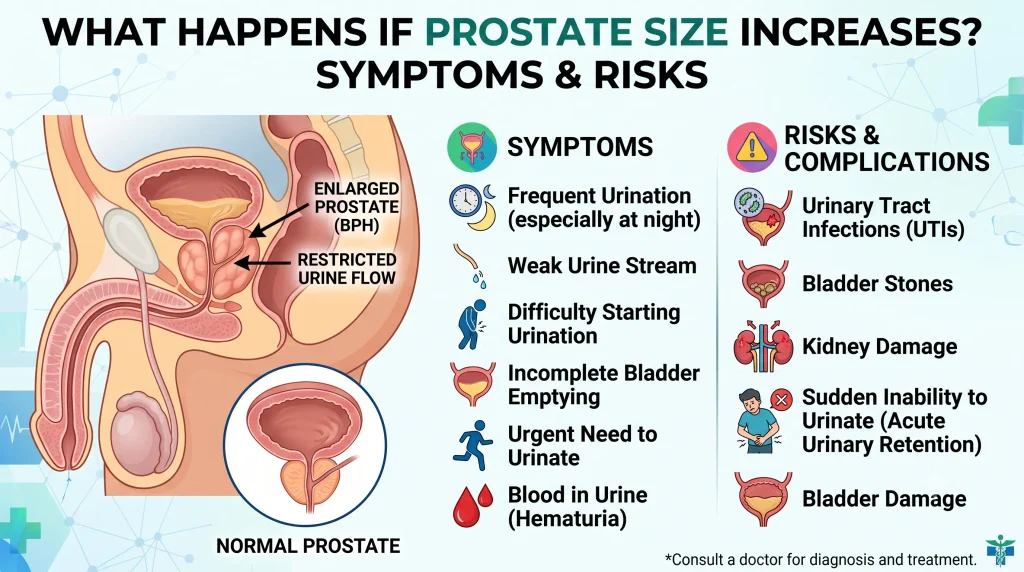
Common Symptoms of an Enlarged Prostate
The symptoms of prostate enlargement can develop gradually. Some men may initially notice only minor changes, while others may develop more noticeable urinary problems.
1. Difficulty Starting Urination
One of the common symptoms is difficulty beginning the urine stream. A person may need to wait before urine starts flowing.
2. Weak Urine Stream
An enlarged prostate can restrict urine flow through the urethra. This may result in a weaker or slower stream than usual.
3. Frequent Urination
A person may feel the need to urinate more frequently, even when the bladder contains only a small amount of urine.
4. Increased Urination at Night
Getting up several times during the night to urinate is known as nocturia. It can interfere with sleep and contribute to daytime tiredness.
5. Urinary Urgency
Some men may experience a sudden, difficult-to-delay need to urinate.
6. Dribbling After Urination
A small amount of urine may continue to leak or dribble after finishing urination.
7. Incomplete Bladder Emptying
A person may feel that urine remains in the bladder even after urinating.
These symptoms can have several possible causes, so they should not automatically be attributed to prostate enlargement.
Why Does the Prostate Increase in Size?
The exact biological reasons behind prostate growth are complex, but prostate enlargement is strongly associated with aging and hormonal changes.
BPH becomes increasingly common with age. Changes in hormones and prostate-cell growth may contribute to the gradual enlargement of the gland.
Other factors may also influence the risk of developing BPH or urinary symptoms.
It is important to remember that an enlarged prostate is not necessarily caused by something a person has done wrong. It can be part of the natural aging process.
Is an Enlarged Prostate the Same as Prostate Cancer?
No.
Benign prostatic hyperplasia (BPH) and prostate cancer are different conditions.
BPH refers to non-cancerous growth of prostate tissue. Prostate cancer occurs when abnormal prostate cells grow uncontrollably.
Having BPH does not mean that a man has prostate cancer. However, some urinary symptoms can occur with different prostate or urinary conditions.
Therefore, persistent urinary changes should be properly evaluated instead of assuming that they are caused by BPH.
Can an Enlarged Prostate Cause Complications?
Many men have mild symptoms that can be managed effectively. However, more significant urinary obstruction can sometimes lead to complications.
Urinary Retention
In some cases, an enlarged prostate can make it difficult to empty the bladder. Acute urinary retention means a person suddenly cannot urinate and requires urgent medical attention.
Urinary Tract Infections
Incomplete bladder emptying can potentially increase the risk of urinary tract infections because urine may remain in the bladder.
Symptoms of a urinary infection can include burning during urination, frequent urination, fever or pelvic discomfort.
Bladder Problems
The bladder may have to work harder against resistance caused by urinary obstruction. Over time, this can affect bladder function.
Bladder Stones
Urine that remains in the bladder can contribute to the formation of bladder stones in some individuals.
Kidney Problems
Severe or prolonged urinary obstruction can potentially affect the upper urinary tract and kidneys. This is one reason persistent or worsening urinary symptoms should not be ignored.
Does a Bigger Prostate Always Mean Worse Symptoms?
Not necessarily.
This is an important point about enlarged prostate symptoms.
The size of the prostate and the degree of urinary symptoms do not always correspond directly. The location of the enlargement and how much it affects the urethra can be more important than size alone.
For example, one man may have a moderately enlarged prostate but experience significant difficulty urinating, while another man with a larger prostate may have relatively mild symptoms.
Doctors therefore consider symptoms, examination findings and appropriate tests rather than relying only on prostate size.
How Is an Enlarged Prostate Diagnosed?
If urinary symptoms persist, a healthcare professional may evaluate the patient using several methods.
Medical History
The doctor may ask about:
- Frequency of urination
- Nighttime urination
- Urine flow
- Urgency
- Difficulty starting urination
- Previous urinary problems
- Current medicines
- Other medical conditions
Physical Examination
A healthcare professional may perform an examination to assess the prostate and look for other possible causes of urinary symptoms.
Urine Tests
Urine testing can help identify infection, blood or other urinary abnormalities.
Blood Tests
Depending on the situation, blood tests may be recommended. A PSA blood test may be considered as part of prostate evaluation, but PSA levels can be affected by several conditions and should be interpreted by a healthcare professional.
Imaging and Other Tests
In selected cases, ultrasound or other tests may be used to assess the urinary tract, bladder emptying or prostate.
The exact evaluation depends on the person’s age, symptoms and medical history.
Treatment Options for Enlarged Prostate
Treatment depends on the severity of symptoms, the impact on daily life and whether complications are present.
1. Watchful Waiting
Men with mild symptoms may not require immediate medical treatment. A doctor may recommend monitoring symptoms and making appropriate lifestyle adjustments.
Regular follow-up can help determine whether the condition is stable or progressing.
2. Lifestyle Measures
Certain lifestyle habits may help some men manage urinary symptoms.
These can include:
- Limiting fluids close to bedtime if nighttime urination is a problem
- Reducing excessive caffeine intake
- Limiting alcohol if it worsens urinary symptoms
- Avoiding prolonged holding of urine
- Maintaining a healthy body weight
- Staying physically active
Lifestyle changes should complement, not replace, medical evaluation when symptoms are persistent.
3. Medicines
Doctors may prescribe medicines to reduce urinary symptoms or improve urine flow.
The appropriate medicine depends on the individual’s condition, other medications and medical history. Prescription treatment should always be taken under professional guidance.
4. Minimally Invasive Procedures
For some men whose symptoms do not respond adequately to medicines, minimally invasive procedures may be considered.
5. Surgery
Surgery may be recommended when symptoms are severe, complications develop or other treatments do not provide sufficient relief.
A urologist can explain the most appropriate options based on the individual case.
How Can Men Support Prostate Health?
There is no single food, supplement or lifestyle habit that can guarantee protection from prostate problems.
However, general healthy habits can support overall health and may contribute to better long-term wellbeing.
Eat a Balanced Diet
A balanced diet containing vegetables, fruits, whole grains, legumes, nuts and other nutrient-rich foods can support overall health.
Stay Physically Active
Regular physical activity can support healthy body weight, cardiovascular health and general wellbeing.
Maintain a Healthy Weight
Excess body weight is associated with several chronic health conditions. Maintaining a healthy weight through appropriate diet and physical activity can be beneficial for overall health.
Stay Hydrated
Adequate hydration is important for normal body function. However, men experiencing frequent nighttime urination may benefit from discussing fluid timing with their healthcare professional.
Avoid Ignoring Persistent Symptoms
Perhaps the most important step is not ignoring changes in urination.
Early evaluation can help identify the underlying cause and determine whether treatment is necessary.
When Should You See a Doctor?
You should consider speaking with a healthcare professional if you experience persistent changes in urination, especially if symptoms are becoming more frequent or interfering with sleep and daily activities.
Seek urgent medical attention if you suddenly cannot urinate.
Medical evaluation is particularly important if urinary symptoms occur together with:
- Blood in the urine
- Fever or chills
- Severe pain
- Repeated urinary infections
- Significant difficulty urinating
- Sudden inability to urinate
These symptoms can have causes other than BPH and should be assessed promptly.
Frequently Asked Questions About Enlarged Prostate
Does an enlarged prostate mean cancer?
No. Benign prostatic hyperplasia is a non-cancerous enlargement of the prostate and is different from prostate cancer. However, urinary symptoms should still be evaluated by a healthcare professional.
What happens when the prostate gets bigger?
A growing prostate can put pressure on the urethra and may interfere with urine flow. This can cause symptoms such as weak urine flow, frequent urination, difficulty starting and incomplete bladder emptying.
Can an enlarged prostate affect urine flow?
Yes. Because the prostate surrounds part of the urethra, enlargement can restrict the passage through which urine flows.
Can an enlarged prostate cause urinary retention?
Yes. In some cases, significant obstruction can result in urinary retention. Sudden inability to urinate is an emergency and requires prompt medical attention.
Does prostate size determine symptom severity?
No. Prostate size and symptom severity do not always correspond directly. The location of prostate enlargement and its effect on the urethra can influence symptoms.
Can lifestyle changes cure an enlarged prostate?
Lifestyle changes may help manage certain urinary symptoms, but they should not be considered a cure for BPH. Men with persistent symptoms should discuss appropriate management with a healthcare professional.
Is frequent urination always caused by an enlarged prostate?
No. Frequent urination can have many causes, including urinary infections, diabetes, bladder conditions, medications and other health issues. A proper evaluation is important.
Final Thoughts
An increase in prostate size is common as men age, but the effects can vary significantly from person to person. An enlarged prostate may cause urinary symptoms when it affects the urethra or bladder function, including weak urine flow, frequent urination, urgency and difficulty emptying the bladder.
The good news is that enlarged prostate symptoms can often be evaluated and managed effectively. The right approach depends on symptom severity, overall health and whether complications are present.
Men should avoid self-diagnosing prostate problems based only on symptoms or prostate size. Persistent or worsening urinary symptoms deserve professional evaluation, and sudden inability to urinate requires urgent medical care.
For brands interested in men’s wellness and nutraceutical product development, Krone Biocare WHO-GMP Certified Co. provides third-party and private-label manufacturing solutions for nutraceutical products, with support for product development and customized packaging.
Talk to our team to explore nutraceutical manufacturing opportunities for your brand.
What Happens If Prostate Size Increases? What Happens If Prostate Size Increases? What Happens If Prostate Size Increases? What Happens If Prostate Size Increases? What Happens If Prostate Size Increases? What Happens If Prostate Size Increases? What Happens If Prostate Size Increases? What Happens If Prostate Size Increases? What Happens If Prostate Size Increases? What Happens If Prostate Size Increases? What Happens If Prostate Size Increases? What Happens If Prostate Size Increases? What Happens If Prostate Size Increases? What Happens If Prostate Size Increases? What Happens If Prostate Size Increases? What Happens If Prostate Size Increases? What Happens If Prostate Size Increases? What Happens If Prostate Size Increases? What Happens If Prostate Size Increases? What Happens If Prostate Size Increases? What Happens If Prostate Size Increases? What Happens If Prostate Size Increases?