
Best Nutraceutical Ingredients for Stress Management: Benefits, Uses & Formulation Guide
Stress has become a common part of modern life. Busy work schedules, irregular sleep, demanding routines, financial pressures, digital overload, and limited time for relaxation can all contribute to everyday stress. While occasional stress is a normal response to challenging situations, ongoing stress can affect overall wellbeing, sleep quality, mood, concentration, energy levels, and daily lifestyle.
As consumers become more interested in preventive wellness and natural health solutions, the demand for stress support nutraceuticals is growing. Brands are exploring formulations containing botanical extracts, amino acids, minerals, vitamins, and other functional ingredients designed to support relaxation, emotional wellbeing, sleep quality, and the body’s response to everyday stress.
This has created significant opportunities for nutraceutical companies looking to develop innovative stress management supplements in formats such as capsules, tablets, gummies, powders, sachets, and effervescent tablets.
In this guide, we explore some of the most commonly used nutraceutical ingredients for stress management, their potential roles, formulation considerations, and how brands can develop quality stress-support products.
What Are Nutraceutical Ingredients for Stress Management?
Nutraceutical ingredients are functional components used in dietary supplements and wellness products to provide nutritional or physiological benefits.
For stress-support formulations, ingredients may include botanical extracts, vitamins, minerals, amino acids, and other compounds selected for their potential role in relaxation, nervous-system support, energy metabolism, or general wellbeing.
A stress-support formulation does not necessarily need to contain a large number of ingredients. In many cases, a carefully designed combination of complementary ingredients can provide a more focused product concept.
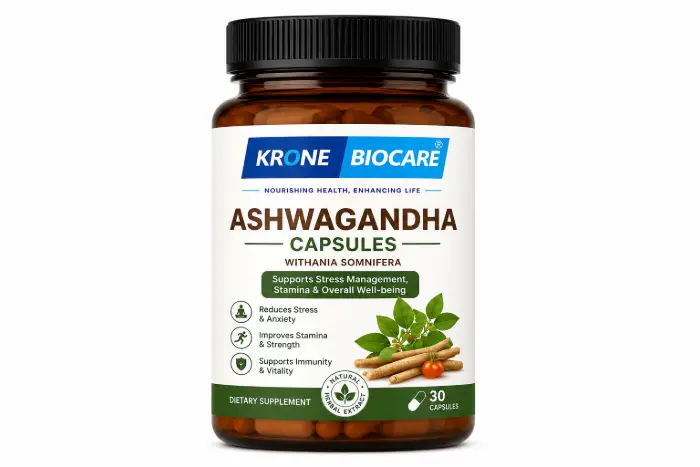
Some commonly considered ingredients include:
- Ashwagandha
- L-Theanine
- Magnesium
- Bacopa monnieri (Brahmi)
- Rhodiola rosea
- Lemon balm
- Chamomile
- Saffron
- GABA
- B vitamins
The appropriate ingredients, quantities, extract specifications, claims, and dosage form should be determined according to the intended market, regulatory requirements, scientific evidence, and product positioning.
Top Nutraceutical Ingredients for Stress Management
1. Ashwagandha
Ashwagandha (Withania somnifera) is one of the most recognized Ayurvedic botanicals used in modern wellness formulations. It is traditionally associated with supporting resilience, vitality, and general wellbeing.
Modern research has investigated standardized ashwagandha extracts for their potential effects on perceived stress and related wellbeing measures.
Some clinical studies have reported improvements in perceived stress among participants using standardized extracts, although results can vary depending on the extract, dosage, study population, and duration.
For nutraceutical brands, ashwagandha can be positioned as a botanical ingredient for:
- Stress-support formulations
- Relaxation and wellness products
- Adaptogenic formulations
- General vitality products
- Sleep-support combinations
Formulation Considerations
The source and standardization of the extract are important. Manufacturers should evaluate the botanical identity, extraction method, marker compounds, purity, stability, and supplier documentation before incorporating ashwagandha into a formulation.
2. L-Theanine
L-Theanine is an amino acid naturally associated with tea leaves, particularly green tea. It has attracted attention in the nutraceutical industry because of its potential role in relaxation and mental wellbeing without being traditionally associated with strong sedation.
L-Theanine is commonly considered for formulations positioned around:
- Relaxation
- Calmness
- Focus and mental wellbeing
- Stress support
- Workday wellness
It can also be combined with other ingredients depending on the desired product concept.
Why It Is Interesting for Formulators
One advantage of L-Theanine is its flexibility. It can fit into products designed for daytime relaxation or mental wellness rather than products specifically positioned as sleep supplements.
Brands should nevertheless ensure that ingredient quantities and marketing claims comply with applicable regulations in their target market.
3. Magnesium
Magnesium is an essential mineral involved in numerous physiological processes, including normal muscle and nerve function and energy metabolism.
Because magnesium plays an important role in normal nervous-system and muscle function, it is frequently included in wellness formulations.
Different forms of magnesium are available, including:
- Magnesium citrate
- Magnesium glycinate
- Magnesium oxide
- Magnesium malate
- Other specialized forms
The choice of magnesium form can influence elemental magnesium content, formulation characteristics, tolerability, and product positioning.
Magnesium in Stress-Support Products
A magnesium-based product may be positioned around general nutritional support, relaxation, muscle function, or evening wellness rather than making unsupported disease-related claims.
For manufacturers, selecting the appropriate magnesium form is an important part of formulation development.
4. Brahmi (Bacopa monnieri)
Brahmi, commonly associated with Bacopa monnieri, is a traditional Ayurvedic botanical widely used in wellness formulations.
It is particularly known for its traditional association with memory, cognitive wellbeing, and mental balance. Modern research has examined standardized bacopa extracts for cognitive and psychological outcomes.
Brahmi may be considered in formulations targeting:
- Mental wellness
- Cognitive support
- Everyday stress support
- Focus and concentration
- Ayurvedic wellness
Standardization Matters
For botanical ingredients such as Bacopa, the extract specification is important. A manufacturer should verify botanical identity and relevant marker compounds while maintaining appropriate quality-control documentation.
5. Rhodiola Rosea
Rhodiola rosea is a botanical traditionally used in various regions for supporting physical and mental resilience.
It is often discussed in the context of adaptogenic formulations and products designed to support wellbeing during periods of fatigue or demanding routines.
Potential formulation applications include:
- Stress-support supplements
- Energy and resilience products
- Mental performance formulations
- Adaptogenic blends
When using Rhodiola, brands should pay attention to botanical authenticity and extract standardization. Different extracts can have different specifications and compositions, so simply listing the botanical name is not sufficient for professional formulation development.
6. Lemon Balm
Lemon balm (Melissa officinalis) is a traditional botanical commonly used in herbal wellness products.
It is often associated with relaxation and calmness and can be incorporated into products designed for evening wellness or general stress support.
Lemon balm may be used in:
- Herbal capsules
- Tablets
- Herbal powders
- Functional beverages
- Gummies
- Multi-herb blends
Its pleasant botanical profile can also make it useful for formulations where consumer experience and natural positioning are important.
7. Chamomile
Chamomile is another well-known botanical used traditionally for relaxation and evening wellness.
Chamomile extracts are commonly found in teas and herbal products, while nutraceutical brands may use standardized extracts in capsules, tablets, gummies, powders, or combination formulas.
It can complement formulations focused on:
- Relaxation
- Evening wellness
- Sleep-support positioning
- Herbal stress support
When developing a chamomile product, manufacturers should consider extract quality, botanical identification, sensory characteristics, stability, and compatibility with other ingredients.
8. Saffron
Saffron is traditionally valued as a botanical ingredient and has also received research interest in relation to mood and emotional wellbeing.
Saffron extracts are generally used in relatively specialized formulations and can help create a premium positioning.
Potential applications include:
- Mood-support formulations
- Emotional wellness products
- Premium botanical supplements
- Stress-support combinations
Because saffron can be a relatively high-value ingredient, authenticity and supply-chain quality are especially important.
Manufacturers should work with reliable suppliers and maintain appropriate testing and documentation for botanical identity and purity.
9. GABA
Gamma-aminobutyric acid, commonly known as GABA, is a naturally occurring neurotransmitter in the body. It is frequently included in nutraceutical products marketed around relaxation and mental wellness.
GABA-containing supplements are available in several formats, including:
- Capsules
- Tablets
- Powder blends
- Gummies
- Combination supplements
However, scientific evidence surrounding oral GABA supplementation and its effects can vary, and regulatory treatment may differ between markets.
Therefore, brands should carefully review available evidence and local regulations before making specific product claims.
10. B Vitamins
B vitamins are a group of essential nutrients involved in energy metabolism and normal physiological functions.
Commonly used B vitamins include:
- Vitamin B1
- Vitamin B2
- Vitamin B3
- Vitamin B5
- Vitamin B6
- Biotin
- Folate
- Vitamin B12
Rather than positioning B vitamins as direct stress-relief ingredients, they are often incorporated into broader wellness formulations because of their role in normal energy metabolism and nervous-system function.
A B-complex formulation may therefore complement a stress-support product designed around overall nutritional wellbeing.
How Do Stress-Support Ingredients Work Together?
One of the most important aspects of nutraceutical formulation is understanding that ingredients do not have to serve exactly the same purpose.
A well-designed formula may combine ingredients with complementary roles.
For example, a formulation could conceptually include:
Botanical + Amino Acid + Mineral
A botanical such as ashwagandha could provide the core herbal positioning, L-Theanine could support a relaxation-focused concept, and magnesium could contribute nutritional support.
Another concept could be:
Ayurvedic Botanical + Vitamin & Mineral Support
This approach can create a broader wellness proposition.
However, more ingredients do not automatically mean a better product. Every additional ingredient introduces considerations related to dose, compatibility, stability, cost, sensory characteristics, regulatory compliance, and consumer understanding.
The goal should be purposeful formulation rather than ingredient overload.
Single-Ingredient vs Multi-Ingredient Stress Supplements
Nutraceutical brands generally have two broad approaches when developing stress-support products.
Single-Ingredient Formula
A single-ingredient product focuses on one primary active.
Examples include:
- Ashwagandha capsules
- Magnesium tablets
- L-Theanine capsules
- Brahmi capsules
Advantages
- Simple product positioning
- Easier consumer understanding
- Focused marketing message
- Straightforward formulation concept
Multi-Ingredient Formula
A combination formula uses several complementary ingredients.
For example:
Ashwagandha + L-Theanine + Magnesium + B Vitamins
Advantages
- Broader wellness positioning
- Multiple functional ingredients
- Potentially differentiated formulation
- Greater opportunity for premium positioning
However, multi-ingredient formulas require more detailed formulation work. Ingredient compatibility, total serving size, stability, sensory properties, and regulatory considerations must all be evaluated.
Choosing the Right Dosage Form
The dosage form can have a major impact on consumer acceptance.
Capsules
Capsules are popular for botanical and nutraceutical ingredients because they offer convenient dosing and a professional supplement appearance.
They are particularly suitable for:
- Herbal extracts
- Amino acids
- Mineral blends
- Botanical combinations
Tablets
Tablets can be economical and suitable for formulations where compression characteristics are favorable.
They can also support convenient packaging such as blister packs or bottles.
Gummies
Gummies have become popular among consumers who prefer alternatives to traditional capsules and tablets.
They can be especially attractive for lifestyle-oriented wellness products. However, gummies require careful attention to:
- Taste
- Texture
- Stability
- Sweeteners
- Active ingredient compatibility
- Manufacturing process
Powders
Powders provide flexibility for drink mixes and sachet-based products.
A stress-support powder could be designed as a beverage mix containing selected botanical extracts, amino acids, minerals, or other functional ingredients.
Effervescent Tablets
Effervescent products provide a convenient beverage format and can offer a differentiated product experience.
However, moisture control and ingredient compatibility are particularly important during formulation and packaging.
Sachets
Sachets are useful for single-serving powders and can be convenient for travel and daily use.
For brands targeting modern wellness consumers, sachets can provide a practical private-label product format.
What Should Brands Consider When Selecting Ingredients?
Selecting an ingredient simply because it is popular is not enough.
A professional formulation process should consider several factors.
1. Scientific Evidence
Brands should review the available scientific evidence for the specific ingredient and intended use.
2. Ingredient Quality
Botanical identity, extract specifications, purity, contaminants, and supplier documentation should be evaluated.
3. Standardization
For botanical extracts, standardization can help provide consistency between batches.
4. Regulatory Compliance
Permitted ingredients, maximum levels, labeling requirements, health claims, and advertising rules vary by market.
5. Stability
Ingredients must remain within acceptable specifications throughout the product’s shelf life.
6. Consumer Preferences
Consumers may prefer clean-label, vegetarian, vegan, sugar-free, natural, or Ayurvedic formulations depending on the market.
7. Cost
Ingredient selection has a direct effect on the final product cost. Premium ingredients may require premium pricing and positioning.
Quality Control in Stress-Support Nutraceutical Manufacturing
Quality is critical when developing any nutraceutical product.
A reliable manufacturing process should include appropriate controls for raw materials, production, packaging, and finished products.
Important quality considerations can include:
- Raw material identification
- Supplier qualification
- Microbial testing
- Heavy metal testing where applicable
- Pesticide testing where applicable
- Assay and potency testing
- Physical testing
- Stability evaluation
- Batch documentation
- Packaging inspection
- Finished-product testing
For botanical products, authentication is particularly important because the correct plant species, plant part, extraction method, and standardization can influence the final product.
How to Develop a Stress-Support Nutraceutical Product
Developing a commercial nutraceutical product involves much more than selecting a few ingredients.
A typical development pathway may include:
Step 1: Define the Product Concept
First determine what the product is designed to support.
For example:
- Everyday stress support
- Relaxation
- Mental wellness
- Evening wellness
- General nutritional support
Step 2: Select Ingredients
Choose ingredients based on the product concept, evidence, regulatory status, target dosage, and consumer preferences.
Step 3: Develop the Formula
A formulation team determines appropriate ingredient combinations and serving quantities.
Step 4: Select the Dosage Form
Choose capsules, tablets, gummies, powders, sachets, or another suitable format.
Step 5: Conduct Testing
Raw materials and finished products should undergo appropriate quality testing.
Step 6: Packaging Development
Packaging should protect the product from environmental factors such as moisture, oxygen, heat, and light where relevant.
Step 7: Label Development
Labels should contain the required information and avoid claims that are not permitted in the target market.
Step 8: Manufacturing
The approved formula is manufactured under controlled production conditions.
Step 9: Final Quality Release
The finished batch is evaluated against established specifications before release.
Why Standardized Ingredients Matter
Standardization is particularly relevant when developing botanical nutraceuticals.
A botanical ingredient can vary depending on:
- Plant species
- Geographic origin
- Plant part
- Harvest conditions
- Extraction method
- Processing conditions
- Storage
- Marker compound concentration
Using a defined extract specification can help improve consistency between production batches.
For example, two suppliers may both offer “Ashwagandha extract,” but their extraction methods and specifications may be different.
Therefore, manufacturers should evaluate the specific extract, rather than treating every botanical ingredient with the same name as identical.
Building a Marketable Stress-Support Supplement
A successful nutraceutical product needs more than a technically sound formula.
The formulation should also align with consumer expectations.
A brand may choose positioning such as:
Natural Wellness
Focus on botanical ingredients and clean-label positioning.
Ayurvedic Wellness
Combine selected Ayurvedic botanicals with modern nutraceutical formulation approaches.
Modern Stress Support
Use ingredients such as L-Theanine, magnesium, selected botanicals, and vitamins in a contemporary formulation.
Premium Wellness
Use carefully standardized botanical extracts and premium packaging to create a higher-end product proposition.
The right positioning depends on the target customer, price point, distribution channel, and regulatory environment.
Stress Management Is More Than Supplementation
It is important to remember that nutraceutical products should not be presented as a replacement for healthy lifestyle practices or professional medical care.
Stress management can involve multiple areas of daily life, including:
- Regular physical activity
- Adequate sleep
- Balanced nutrition
- Relaxation practices
- Time management
- Social connection
- Mindfulness
- Healthy work-life boundaries
A supplement can be positioned as part of an overall wellness routine rather than as a standalone solution to every stress-related concern.
People experiencing severe, persistent, or disruptive symptoms should seek appropriate professional healthcare advice.
Why Work With a Professional Nutraceutical Manufacturer?
For brands entering the stress-support supplement market, partnering with an experienced contract manufacturer can simplify product development.
A professional nutraceutical manufacturing partner can assist with:
- Product concept development
- Ingredient sourcing
- Formula development
- Raw material evaluation
- Dosage-form selection
- Manufacturing
- Quality testing
- Packaging
- Label support
- Private-label manufacturing
- Batch documentation
- Product dispatch
This allows brand owners, startups, pharmaceutical companies, marketers, and distributors to focus on branding, sales, and market development while the manufacturing partner manages the production side.
Stress-Support Nutraceutical Manufacturing With Krone Biocare
Krone Biocare provides nutraceutical manufacturing solutions for brands looking to develop and manufacture wellness products in different dosage forms.
A stress-support product can be developed around selected botanical extracts, vitamins, minerals, amino acids, or combination ingredients according to the brand’s formulation concept and target market.
Depending on the product, manufacturing formats can include:
- Nutraceutical tablets
- Capsules
- Gummies
- Powder supplements
- Protein and wellness powders
- Sachets
- Effervescent tablets
- Other customized nutraceutical formats
From ingredient sourcing and formulation to manufacturing, packaging, labeling, quality checks, and dispatch, a structured contract manufacturing process can help brands move from concept to finished product more efficiently.
For businesses planning to launch their own stress management supplement brand, selecting the right manufacturing partner is an important step in maintaining consistency, quality, and scalability.
Frequently Asked Questions
What are the best nutraceutical ingredients for stress management?
Commonly considered ingredients include ashwagandha, L-Theanine, magnesium, Bacopa monnieri, Rhodiola rosea, lemon balm, chamomile, saffron, GABA, and B vitamins. The best combination depends on the intended product, evidence, formulation requirements, and applicable regulations.
Is ashwagandha used in stress-support supplements?
Yes. Ashwagandha is widely used in Ayurvedic and modern wellness formulations and has been studied for its potential role in perceived stress and general wellbeing.
Can magnesium be included in a stress-support supplement?
Yes. Magnesium is commonly included in nutritional wellness products because it contributes to normal nerve and muscle function and normal energy metabolism.
Are botanical extracts suitable for nutraceutical formulations?
Botanical extracts can be used in many nutraceutical products, provided the ingredient is appropriate for the target market and meets relevant quality and regulatory requirements.
Which dosage form is best for stress supplements?
There is no single best format. Capsules, tablets, gummies, powders, sachets, and effervescent tablets can all be suitable depending on the ingredients, target consumers, formulation, serving size, stability, and desired product experience.
Can multiple ingredients be combined into one stress-support formula?
Yes. Multi-ingredient formulas are common in the nutraceutical industry. However, each ingredient should have a clear purpose and the final formula should be evaluated for compatibility, stability, safety, dosage, and regulatory compliance.
What should I look for in a nutraceutical manufacturer?
Look for a manufacturer with appropriate manufacturing capabilities, quality-control systems, ingredient sourcing procedures, testing processes, documentation, packaging capabilities, and experience with your desired dosage form.
Can a startup launch its own stress-support supplement brand?
Yes. Startups can work with contract or private-label nutraceutical manufacturers to develop products without necessarily establishing their own manufacturing facility. The exact process depends on the target market, product type, regulatory requirements, and business model.
Conclusion
The growing focus on mental wellbeing and healthy lifestyles is creating opportunities for innovative stress management nutraceutical products.
Ingredients such as ashwagandha, L-Theanine, magnesium, Brahmi, Rhodiola, lemon balm, chamomile, saffron, GABA, and B vitamins can all play different roles in carefully designed wellness formulations.
However, successful product development requires more than simply combining popular ingredients.
Brands need to consider scientific evidence, ingredient quality, standardization, dosage, formulation compatibility, stability, regulatory requirements, consumer preferences, packaging, and manufacturing quality.
Whether the goal is to develop an Ayurvedic stress-support product, a modern nutraceutical formula, a relaxation-focused gummy, a botanical capsule, or a convenient sachet or effervescent product, working with an experienced manufacturing partner can help transform a product concept into a consistent commercial formulation.
For businesses planning to enter the growing wellness market, the right combination of quality ingredients, thoughtful formulation, reliable manufacturing, compliant labeling, and strong brand positioning can provide a solid foundation for building a successful stress-support nutraceutical product.
ABOUT KRONE BIOCARE
Krone Biocare is a WHO-GMP Certified trusted pharmaceutical, nutraceutical, and Ayurvedic contract manufacturing company in India, offering quality manufacturing, private labeling, formulation, packaging, and customized solutions for growing healthcare brands.
Nutraceutical Ingredients for Stress Management, Nutraceutical Ingredients for Stress Management, Nutraceutical Ingredients for Stress Management, Nutraceutical Ingredients for Stress Management, Nutraceutical Ingredients for Stress Management, Nutraceutical Ingredients for Stress Management, Nutraceutical Ingredients for Stress Management, Nutraceutical Ingredients for Stress Management, Nutraceutical Ingredients for Stress Management, Nutraceutical Ingredients for Stress Management, Nutraceutical Ingredients for Stress Management, Nutraceutical Ingredients for Stress Management, Nutraceutical Ingredients for Stress Management, Nutraceutical Ingredients for Stress Management Nutraceutical Ingredients for Stress Management, Nutraceutical Ingredients for Stress Management, Nutraceutical Ingredients for Stress Management, Nutraceutical Ingredients for Stress Management, Nutraceutical Ingredients for Stress Management, Nutraceutical Ingredients for Stress Management, Nutraceutical Ingredients for Stress Management, Nutraceutical Ingredients for Stress Management, Nutraceutical Ingredients for Stress Management, Nutraceutical Ingredients for Stress Management, Nutraceutical Ingredients for Stress Management, Nutraceutical Ingredients for Stress Management, Nutraceutical Ingredients for Stress Management, Nutraceutical Ingredients for Stress Management