
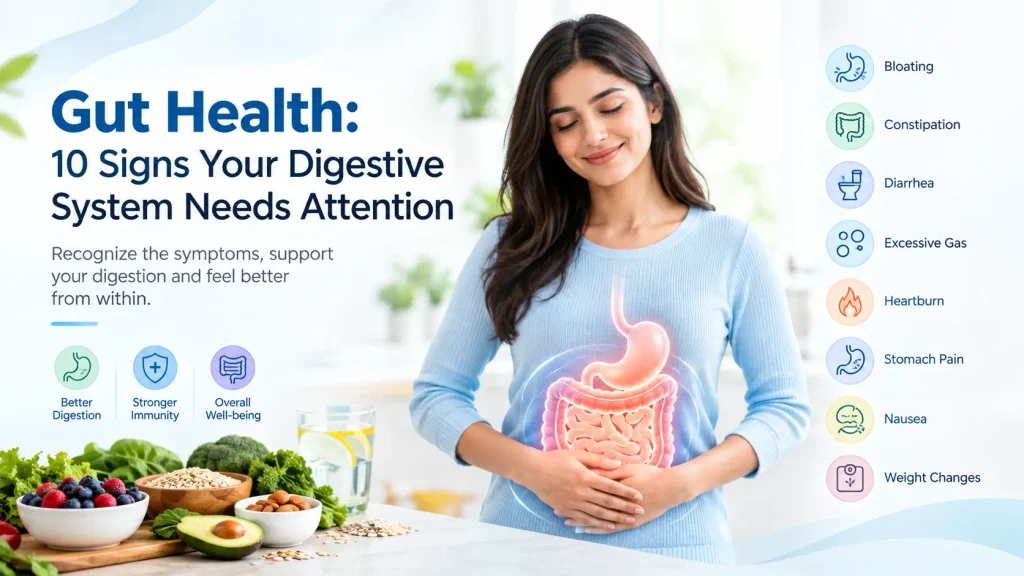
Gut Health: 10 Signs Your Digestive System Needs Attention
Introduction
Your digestive system does much more than break down food. It helps your body absorb nutrients, supports the immune system, and plays an important role in overall well-being. The digestive tract contains trillions of microorganisms that form the gut microbiome, which interacts with food, digestion and other body systems.
When your digestive system is not functioning well, your body may give you different signals. Occasional bloating or constipation can happen to anyone, but persistent or recurring digestive symptoms may deserve attention.
Understanding the common signs of poor gut health can help you identify when lifestyle changes may be useful and when it is appropriate to speak with a healthcare professional.
In this article, we discuss 10 signs your digestive system may need attention, along with simple habits that can support better digestive health.
What Is Gut Health?
Gut health refers to the condition and functioning of your digestive system, including the stomach, small intestine, large intestine and the microorganisms living in your digestive tract.
A healthy digestive system should be able to:
- Digest food efficiently
- Absorb essential nutrients
- Support regular bowel movements
- Maintain a balanced gut microbiome
- Help protect against harmful microorganisms
- Support normal immune function
Gut health can be influenced by diet, hydration, physical activity, sleep, stress, medications and other lifestyle factors.
There is no single symptom that can determine whether your gut microbiome is “healthy” or “unhealthy.” However, persistent digestive changes can be a reason to pay closer attention to your overall digestive health.
10 Signs Your Digestive System May Need Attention
1. Frequent Bloating
Bloating is one of the most common digestive complaints.
You may notice that your stomach feels full, tight or swollen, particularly after eating. Occasional bloating can be normal, especially after consuming large meals or certain foods.
However, frequent or persistent bloating may be associated with several digestive issues, including food intolerances, constipation or other gastrointestinal conditions.
What may help?
Try eating slowly, chewing food thoroughly, drinking enough water and keeping track of foods that seem to trigger symptoms.
2. Constipation
Constipation generally involves having fewer bowel movements than usual or passing hard, dry stools that are difficult to pass.
Common contributing factors can include:
- Low dietary fibre
- Inadequate fluid intake
- Lack of physical activity
- Changes in routine
- Certain medications
- Some underlying medical conditions
Increasing fibre gradually, drinking adequate fluids and staying physically active may help support regular bowel movements.
Good sources of dietary fibre include fruits, vegetables, whole grains, legumes, nuts and seeds.
3. Frequent Diarrhea
Occasional diarrhea can occur due to infections, contaminated food, dietary changes or other temporary causes.
Repeated or persistent diarrhea, however, should not simply be ignored because it can contribute to dehydration and may sometimes indicate an underlying digestive condition.
If diarrhea continues, becomes severe or is accompanied by symptoms such as blood in the stool, fever or significant weakness, seek medical advice.
4. Excessive Gas
Gas is a normal part of digestion. It develops when swallowed air and intestinal bacteria interact with food in the digestive tract.
However, excessive gas, especially when accompanied by abdominal pain, bloating or changes in bowel habits, may indicate that something in your diet or digestive system needs attention.
Some people experience more gas after consuming certain carbohydrates, beans, carbonated drinks or foods they do not tolerate well.
Keeping a food and symptom diary can help identify possible patterns.
5. Abdominal Discomfort or Pain
Occasional mild abdominal discomfort can have many causes, including overeating, gas or temporary digestive disturbances.
Persistent, recurring or severe abdominal pain is different and should be evaluated by a healthcare professional.
Pay attention to:
- Where the pain occurs
- When it happens
- Whether it is related to meals
- How long it lasts
- Whether other symptoms occur at the same time
This information can help a healthcare professional understand the possible cause.
6. Changes in Bowel Habits
A noticeable change in your normal bowel pattern can be another sign that your digestive system deserves attention.
For example, you may experience:
- More frequent bowel movements
- Less frequent bowel movements
- Alternating constipation and diarrhea
- Changes in stool consistency
- A persistent feeling of incomplete bowel emptying
Temporary changes can occur because of diet, travel, stress or changes in daily routine. Persistent changes should be discussed with a healthcare professional.
7. Heartburn or Acid Reflux
Heartburn is a burning sensation that can occur when stomach contents move upward into the esophagus.
Some people experience symptoms after large meals, spicy foods, lying down soon after eating or consuming certain trigger foods.
Lifestyle habits that may help some people include:
- Eating smaller meals
- Avoiding lying down immediately after eating
- Identifying individual trigger foods
- Maintaining a healthy weight
- Avoiding smoking
Frequent or severe heartburn should be discussed with a healthcare professional because ongoing reflux may require evaluation and treatment.
8. Food Intolerance Symptoms
Some people experience digestive symptoms after eating particular foods.
Possible symptoms include:
- Bloating
- Gas
- Abdominal discomfort
- Diarrhea
- Nausea
Food intolerance is different from a food allergy. A food allergy can involve the immune system and may cause potentially serious reactions.
If you repeatedly notice symptoms after eating a particular food, do not unnecessarily eliminate multiple food groups without professional guidance. A doctor or registered dietitian can help determine an appropriate approach.
9. Nausea or Feeling Uncomfortably Full
Feeling nauseated or unusually full can sometimes be related to digestion.
Occasional nausea may occur after overeating, infections, motion sickness, certain medications or other temporary causes.
If nausea occurs frequently, affects your ability to eat or drink, or is accompanied by vomiting, abdominal pain or unexplained weight loss, medical evaluation may be appropriate.
10. Unexplained Weight Changes
Unexpected changes in body weight can have many causes.
Unintentional weight loss may sometimes be associated with digestive disorders that affect appetite, digestion or nutrient absorption.
Likewise, unexplained weight gain can have numerous possible causes, including changes in diet, activity, medications and other health factors.
If you experience significant or unexplained changes in body weight, consult a healthcare professional rather than assuming that gut health is the only cause.
What Can Affect Your Gut Health?
Several everyday factors can influence digestive health.
1. Diet
A varied diet containing vegetables, fruits, whole grains, legumes, nuts and seeds can provide dietary fibre and other nutrients that support normal digestion.
2. Hydration
Adequate fluid intake supports normal body functions and can help maintain softer stools, particularly when dietary fibre intake increases.
3. Physical Activity
Regular physical activity can support overall health and may also help maintain regular bowel movements.
4. Sleep
Good-quality sleep is an important part of overall health. Maintaining a consistent sleep schedule can support general well-being.
5. Stress
Stress can affect the digestive system. Some people notice changes in appetite, bowel habits, bloating or abdominal discomfort during stressful periods.
Relaxation techniques, physical activity, adequate sleep and professional support when needed may help manage stress.
6. Medications
Some medications can affect digestion or bowel habits. If you notice digestive symptoms after starting a medication, speak with your healthcare professional before making any changes.
How to Improve Gut Health Naturally
There is no single food or supplement that can guarantee perfect gut health. Instead, focus on sustainable lifestyle habits.
Eat More Fibre-Rich Foods
Fruits, vegetables, whole grains, beans, lentils, nuts and seeds can provide dietary fibre.
Increase fibre gradually if your current intake is low, because suddenly consuming large amounts may cause temporary gas or bloating.
Include a Variety of Plant Foods
Eating different types of plant foods provides a variety of nutrients and naturally occurring compounds that support a diverse diet.
Drink Enough Fluids
Adequate hydration works together with dietary fibre to support normal bowel function.
Stay Physically Active
Walking, cycling, strength training and other forms of regular physical activity can contribute to overall health.
Eat Mindfully
Take time to eat and chew your food thoroughly. Eating slowly may also make it easier to recognize when you are comfortably full.
Limit Highly Processed Foods
A balanced eating pattern can include occasional processed foods, but diets heavily dominated by highly processed foods may provide less dietary fibre and nutritional variety.
Prioritize Sleep
Aim for a consistent sleep routine and create a comfortable environment that supports adequate rest.
Do Probiotics Improve Gut Health?
Probiotics are live microorganisms that may provide health benefits when consumed in adequate amounts and when a particular strain and product have evidence supporting its use.
However, probiotics are not all the same. Benefits can depend on the specific strain, dose and health condition.
Foods such as yogurt containing live cultures and some fermented foods can contain beneficial microorganisms, although their effects vary.
If you are considering a probiotic supplement, particularly if you have an existing medical condition or take medication, discuss it with a healthcare professional.
Prebiotics vs Probiotics: What’s the Difference?
The terms prebiotics and probiotics are often confused.
Probiotics are live microorganisms that can provide a health benefit when consumed in adequate amounts.
Prebiotics are substances, often certain types of dietary fibre, that are utilized by microorganisms in the body and can support beneficial microbes.
Both concepts are connected to the gut microbiome, but they are not interchangeable.
A varied diet rich in plant foods can naturally provide many types of dietary fibre.
When Should You See a Doctor?
Not every digestive symptom indicates a serious problem. However, certain symptoms should receive prompt medical attention.
Speak with a healthcare professional if you experience:
- Persistent or severe abdominal pain
- Blood in the stool
- Black or tarry stools
- Persistent vomiting
- Difficulty swallowing
- Persistent diarrhea
- Significant unexplained weight loss
- Persistent changes in bowel habits
- Signs of dehydration
- Symptoms that interfere with normal daily activities
These symptoms can have many possible causes, so proper medical evaluation is important.
Gut Health and Your Overall Well-Being
Digestive health is one part of overall health. Your gastrointestinal system interacts with nutrition, immunity, metabolism and many other aspects of the body.
Rather than focusing on a single “superfood” or supplement, consider the bigger picture:
Balanced diet + adequate hydration + regular activity + sufficient sleep + stress management = better overall health habits.
Small, consistent changes are generally more sustainable than extreme dietary restrictions.
Frequently Asked Questions About Gut Health
What are the most common signs of poor gut health?
Common digestive symptoms can include frequent bloating, constipation, diarrhea, excessive gas, abdominal discomfort, heartburn and changes in bowel habits. These symptoms can have many different causes and do not by themselves diagnose a gut disorder.
How can I improve my gut health?
A balanced diet containing fibre-rich plant foods, adequate hydration, regular physical activity, sufficient sleep and stress management can support overall digestive health.
Are probiotics good for gut health?
Some specific probiotic strains may provide health benefits, but effects vary by strain, dose and individual circumstances. Probiotics should not be viewed as a universal solution for every digestive problem.
What foods are good for gut health?
Fruits, vegetables, whole grains, legumes, nuts and seeds are good sources of dietary fibre. Fermented foods containing live cultures may also be included as part of a balanced diet.
How much fibre should I eat?
Fibre needs vary by age, sex and individual health requirements. Adults are generally encouraged to consume a substantial amount of dietary fibre through a varied diet. Increase fibre gradually and drink adequate fluids.
Is bloating always a sign of poor gut health?
No. Occasional bloating is common and can be caused by eating quickly, consuming certain foods, overeating or swallowing air. Frequent or persistent bloating may warrant discussion with a healthcare professional.
Can stress affect digestion?
Yes. Stress can influence digestive symptoms and bowel habits in some people. Managing stress through physical activity, adequate sleep, relaxation techniques and professional support when necessary may be helpful.
Final Thoughts
Your digestive system can provide useful clues about your overall well-being. Occasional gas, bloating or changes in bowel movements are common, but persistent or recurring symptoms should not be ignored.
Supporting gut health starts with simple habits: eat a varied, fibre-rich diet, stay hydrated, remain physically active, get adequate sleep and pay attention to how your body responds to different foods and routines.
Most importantly, avoid self-diagnosing based on internet symptoms. If digestive symptoms are persistent, severe or accompanied by warning signs such as bleeding, unexplained weight loss or significant pain, consult a qualified healthcare professional.
Krone Biocare (WHO-GMP Certified Manufacturing Company) focuses on pharmaceutical, nutraceutical and Ayurvedic manufacturing solutions, supporting healthcare brands with product development and manufacturing capabilities.
Medical Disclaimer
This article is provided for general educational and informational purposes only. It is not intended to diagnose, treat, cure or prevent any disease or medical condition. Individual digestive symptoms can have many possible causes. Consult a qualified healthcare professional for personalized medical advice, diagnosis or treatment.