
Infertility: Causes, Symptoms, Diagnosis and Treatment Options in Men and Women
Infertility is an important reproductive health concern affecting millions of individuals and couples worldwide. Many couples experience difficulty conceiving despite trying for several months or even years. Although infertility can be emotionally challenging, understanding its causes, symptoms, risk factors and available treatment options can help individuals make informed decisions about their reproductive health.
Infertility is not exclusively a women’s health problem. Both male and female reproductive factors can contribute to difficulty getting pregnant. In some cases, a combination of factors is responsible, while in others, doctors may not identify a specific cause.
According to the World Health Organization (WHO), approximately one in six people of reproductive age experience infertility during their lifetime. This highlights the importance of reproductive health awareness, early medical evaluation and access to appropriate fertility care.
In this comprehensive guide, we will explain what infertility means, its common causes in men and women, early warning signs, diagnostic tests, treatment options and lifestyle habits that may support reproductive health.
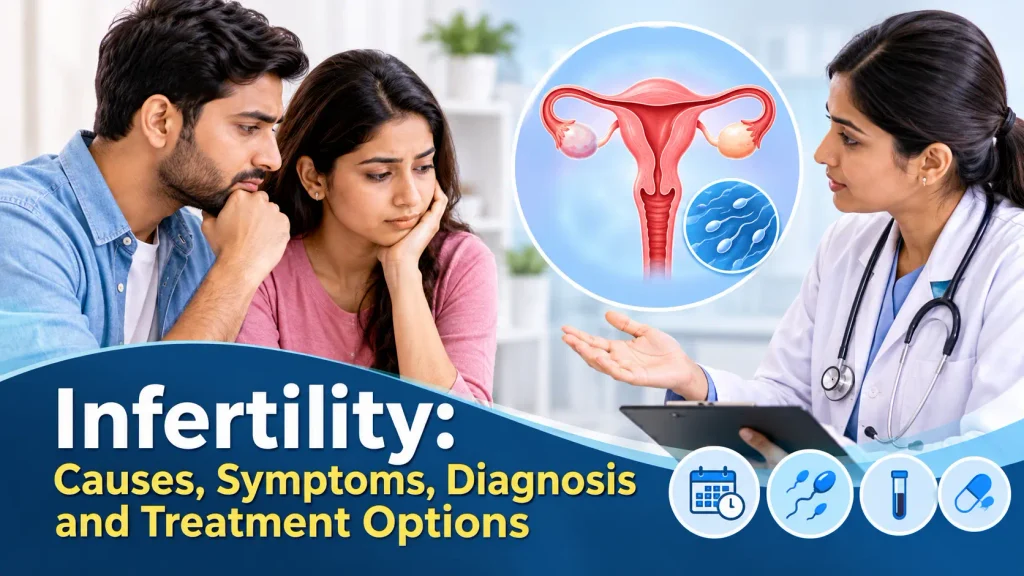
What Is Infertility?
Infertility is a condition of the reproductive system in which a couple is unable to achieve pregnancy after 12 months or more of regular, unprotected sexual intercourse.
However, women aged 35 years and above may benefit from seeking fertility evaluation after six months of unsuccessful attempts. Women over 40 or individuals with known reproductive health conditions should consider consulting a specialist earlier.
Infertility can affect both men and women and may occur due to hormonal imbalances, ovulation problems, sperm-related issues, reproductive organ abnormalities or other medical conditions.
There are two commonly recognised types of infertility:
1. Primary Infertility
Primary infertility refers to a situation in which a person or couple has never achieved a pregnancy despite regular attempts to conceive.
2. Secondary Infertility
Secondary infertility occurs when a person or couple has previously achieved a pregnancy but experiences difficulty conceiving again.
Both conditions require appropriate medical assessment to identify possible underlying causes.
How Common Is Infertility?
Infertility is a global reproductive health concern. According to WHO estimates, around 17.5% of adults experience infertility during their lifetime.
Infertility can affect people regardless of their geographical location or economic background. It may also have emotional, social and financial consequences for couples and families.
The condition should be approached as a medical concern rather than a reason for embarrassment or social pressure. Both partners should participate in the evaluation process because male and female factors can independently or jointly contribute to infertility.
What Are the Main Causes of Infertility?
The causes of infertility can vary from person to person. Some factors affect egg production and ovulation, while others interfere with sperm production, fertilisation or the ability of an embryo to develop and implant.
Understanding the common causes of infertility is the first step towards seeking appropriate medical guidance.
Causes of Female Infertility
Female infertility may develop due to problems involving the ovaries, fallopian tubes, uterus or reproductive hormones.
Here are some common causes:
1. Polycystic Ovary Syndrome (PCOS)
Polycystic Ovary Syndrome (PCOS) is a common hormonal condition that can affect women’s reproductive health.
Women with PCOS may experience irregular menstrual cycles, elevated androgen levels and problems with ovulation.
Because ovulation may occur irregularly or not at all, PCOS can make conception more difficult.
Common symptoms associated with PCOS include:
- Irregular or missed periods.
- Excessive facial or body hair.
- Acne and oily skin.
- Weight gain or difficulty managing weight.
- Thinning hair on the scalp.
- Difficulty conceiving.
PCOS does not mean a woman cannot become pregnant. Many women with PCOS conceive naturally or with appropriate medical treatment.
2. Irregular Ovulation
Ovulation is the process in which an ovary releases an egg during the menstrual cycle.
If ovulation does not occur regularly, the chances of pregnancy may decrease.
Irregular ovulation can be associated with PCOS, thyroid disorders, hormonal imbalances, significant weight changes and certain medical conditions.
3. Blocked Fallopian Tubes
Fallopian tubes carry eggs from the ovaries towards the uterus. Fertilisation usually takes place within these tubes.
If one or both fallopian tubes become blocked or damaged, sperm may not reach the egg, or the fertilised egg may not travel normally towards the uterus.
Possible causes include:
- Pelvic inflammatory disease.
- Previous pelvic infections.
- Endometriosis.
- Previous abdominal or pelvic surgery.
- Certain sexually transmitted infections.
4. Endometriosis
Endometriosis is a condition in which tissue similar to the lining of the uterus grows outside the uterus.
It may affect the ovaries, fallopian tubes and surrounding pelvic structures.
Common symptoms include:
- Painful menstrual periods.
- Chronic pelvic pain.
- Pain during sexual intercourse.
- Heavy menstrual bleeding.
- Difficulty conceiving.
Endometriosis can affect fertility through inflammation, adhesions and damage to reproductive organs.
5. Thyroid and Hormonal Disorders
Thyroid hormones play an important role in regulating metabolism and reproductive functions.
Both an underactive thyroid (hypothyroidism) and an overactive thyroid (hyperthyroidism) may interfere with menstrual cycles and ovulation.
Other hormonal conditions involving the pituitary gland or reproductive hormones can also affect fertility.
6. Age-Related Decline in Fertility
Age is an important factor affecting female fertility.
Women are born with a limited supply of eggs. As age increases, both the quantity and quality of eggs generally decline.
Fertility tends to decrease more noticeably after the mid-30s, with a further decline after 40.
Age-related changes can increase the time needed to conceive and the risk of pregnancy complications.
7. Uterine Fibroids and Other Uterine Conditions
Uterine fibroids are non-cancerous growths that develop in or around the uterus.
Depending on their size and location, some fibroids may interfere with implantation or pregnancy.
Other uterine conditions, including congenital abnormalities and adhesions, may also affect reproductive health.
Causes of Male Infertility
Male infertility is another important factor in reproductive health. Healthy sperm production, movement and delivery are essential for natural conception.
Some common causes of male infertility include:
1. Low Sperm Count
A low sperm count means that the semen contains fewer sperm than expected.
A lower sperm concentration may reduce the probability of sperm reaching and fertilising an egg.
2. Poor Sperm Motility
Sperm motility refers to the ability of sperm to move effectively.
If sperm cannot swim properly, reaching the egg may become difficult.
3. Abnormal Sperm Morphology
Morphology refers to the size and shape of sperm.
Abnormal sperm shape may affect the ability of sperm to move and fertilise an egg. However, morphology should always be interpreted alongside other semen parameters.
4. Varicocele
A varicocele is an enlargement of veins within the scrotum.
In some men, it may affect testicular temperature and sperm production, potentially contributing to infertility.
5. Hormonal Imbalances
Hormones such as testosterone, follicle-stimulating hormone and luteinising hormone help regulate sperm production.
Hormonal abnormalities may interfere with normal testicular function.
6. Infections and Reproductive Tract Problems
Certain infections and blockages in the reproductive tract can affect sperm production or the movement of sperm through the reproductive system.
7. Lifestyle and Environmental Factors
Certain lifestyle habits may negatively influence male reproductive health, including:
- Smoking and tobacco consumption.
- Excessive alcohol intake.
- Obesity.
- Anabolic steroid use.
- Exposure to certain environmental toxins.
- Excessive heat exposure around the testes.
Not every individual with these risk factors will experience infertility, but reducing avoidable exposures may support reproductive health.
What Are the Early Signs and Symptoms of Infertility?
One of the most important things to understand about infertility is that it does not always produce noticeable symptoms.
Many people discover fertility problems only after trying to conceive for an extended period.
However, certain signs may indicate an underlying reproductive health condition.
Common Signs of Female Infertility
- Irregular menstrual periods: Cycles that are consistently irregular may indicate problems with ovulation or reproductive hormones.
- Absent periods: Missing menstrual periods for extended periods may suggest that ovulation is not occurring regularly.
- Severe menstrual pain: Painful periods, particularly when associated with chronic pelvic pain, may require evaluation for endometriosis.
- Excessive facial hair: Unusual facial or body hair growth may be associated with hormonal conditions such as PCOS.
- Unexplained pelvic pain: Persistent pelvic discomfort should be assessed by a healthcare professional.
- Pain during intercourse: This may be associated with endometriosis or other pelvic conditions.
- Unusual vaginal discharge: Certain abnormal discharges may indicate infections that require medical evaluation.
Common Signs of Male Infertility
- Sexual dysfunction: Erectile or ejaculation problems may interfere with conception.
- Testicular pain or swelling: Pain, swelling or a lump in the testicular area requires medical assessment.
- Reduced sexual desire: Hormonal changes may sometimes affect sexual desire.
- History of testicular injury: Previous injuries or surgeries may affect reproductive function.
- Hormonal changes: Reduced facial hair or other physical changes may sometimes indicate hormonal abnormalities.
- Difficulty conceiving: In many cases, difficulty achieving pregnancy is the only noticeable indication of male infertility.
Important: These symptoms do not automatically mean that someone is infertile. Only appropriate medical evaluation can help identify the underlying problem.
How Is Infertility Diagnosed?
Infertility diagnosis involves evaluating both partners rather than focusing exclusively on the woman.
A fertility specialist or qualified healthcare professional may recommend different tests depending on medical history, age, symptoms and duration of attempts to conceive.
1. Medical and Reproductive History
The doctor may ask about:
- Menstrual cycle regularity.
- Previous pregnancies.
- Duration of attempts to conceive.
- Sexual and reproductive health.
- Previous infections or surgeries.
- Existing medical conditions.
- Medications and lifestyle habits.
2. Hormone Blood Tests
Blood tests may help assess reproductive hormone levels.
Depending on the clinical situation, a doctor may recommend:
- Follicle-stimulating hormone (FSH).
- Luteinising hormone (LH).
- Anti-Müllerian hormone (AMH).
- Thyroid-stimulating hormone (TSH).
- Prolactin.
- Other relevant hormone tests.
These tests provide useful information but cannot independently determine whether a person will become pregnant.
3. Ultrasound Examination
Pelvic ultrasound can help examine the uterus and ovaries.
It may help identify:
- Ovarian cysts.
- Features associated with PCOS.
- Uterine fibroids.
- Certain structural abnormalities.
- Antral follicle count.
4. Hysterosalpingography (HSG)
HSG is an imaging test used to examine the uterus and determine whether the fallopian tubes are open.
It may help identify blockages or certain abnormalities within the reproductive tract.
5. Semen Analysis
Semen analysis is one of the primary investigations used to assess male fertility.
It evaluates parameters such as:
- Sperm concentration.
- Sperm movement.
- Sperm morphology.
- Semen volume.
Additional male fertility investigations may be recommended if the initial results are abnormal.
What Are the Treatment Options for Infertility?
Infertility treatment depends on the underlying cause, the age of both partners, reproductive health, medical history and personal preferences.
There is no single treatment that works for everyone.
A qualified fertility specialist may recommend one or more of the following options.
1. Lifestyle Modifications
Lifestyle changes may help improve general reproductive health.
These may include:
- Maintaining a healthy body weight.
- Following a balanced and nutritious diet.
- Engaging in regular physical activity.
- Avoiding smoking and tobacco.
- Limiting or avoiding alcohol when trying to conceive.
- Managing stress and maintaining adequate sleep.
Lifestyle changes are supportive measures and cannot correct every medical cause of infertility.
2. Ovulation-Induction Medicines
For women experiencing ovulation disorders, doctors may prescribe medicines to stimulate egg development and ovulation.
The selection of medication depends on the underlying condition and individual medical requirements.
These medicines require medical supervision because they may carry risks, including multiple pregnancy and ovarian hyperstimulation.
3. Treatment of Underlying Medical Conditions
Treating conditions such as thyroid disorders, PCOS, infections or other reproductive health problems may improve the chances of conception in some individuals.
The treatment plan should be based on a confirmed diagnosis.
4. Intrauterine Insemination (IUI)
IUI is a fertility procedure in which prepared sperm is placed directly into the uterus around the time of ovulation.
It may be recommended in selected cases depending on sperm quality, ovulation and other reproductive factors.
5. In Vitro Fertilisation (IVF)
IVF is an assisted reproductive technology in which eggs are collected from the ovaries and fertilised with sperm in a laboratory.
The resulting embryo may then be transferred into the uterus.
IVF may be recommended for certain conditions, including:
- Blocked or severely damaged fallopian tubes.
- Some cases of male-factor infertility.
- Certain cases of unexplained infertility.
- Specific reproductive conditions where other treatments have not been successful.
IVF does not guarantee pregnancy, and its success depends on several individual factors.
6. Intracytoplasmic Sperm Injection (ICSI)
ICSI is an advanced fertility technique in which a single sperm is injected directly into an egg during the IVF process.
It may be considered in selected cases of male-factor infertility or previous fertilisation difficulties.
7. Surgical Treatment
In selected cases, surgery may help address conditions such as certain uterine abnormalities, fibroids, endometriosis or varicocele.
The suitability of surgery depends on the specific diagnosis and potential benefits and risks.
10 Lifestyle Tips That May Support Fertility
Healthy lifestyle habits can support general reproductive health in both men and women.
Here are ten practical recommendations:
- Maintain a healthy weight: Both obesity and being significantly underweight may affect reproductive hormones and fertility.
- Eat a balanced diet: Include vegetables, fruits, whole grains, legumes, healthy fats and adequate protein.
- Avoid smoking: Tobacco use is associated with adverse reproductive health outcomes in both men and women.
- Limit alcohol consumption: Alcohol may affect reproductive health. Avoiding it when trying to conceive is a sensible precaution.
- Exercise regularly: Moderate physical activity supports metabolic health and overall well-being.
- Manage stress: Consider relaxation exercises, meditation, counselling or other healthy coping strategies.
- Get sufficient sleep: Consistent and adequate sleep supports general hormonal and metabolic health.
- Manage existing medical conditions: Seek appropriate care for PCOS, diabetes, thyroid disorders and other relevant conditions.
- Prevent sexually transmitted infections: Appropriate screening, prevention and timely treatment can reduce the risk of reproductive tract damage.
- Avoid unprescribed medicines and supplements: Fertility-related medicines and supplements should only be used after professional medical advice.
These habits may improve overall health, but they should not replace fertility testing or medically recommended treatment.
When Should You Consult a Fertility Specialist?
Knowing when to seek medical advice is important.
Consider consulting a qualified fertility specialist if:
- You are under 35 and have been trying to conceive for 12 months without success.
- You are 35 or older and have been trying for six months without success.
- You are over 40 and planning pregnancy.
- You experience irregular or absent menstrual periods.
- You have a history of PCOS, endometriosis or pelvic infections.
- You have experienced repeated pregnancy losses.
- Your partner has a known sperm-related or reproductive health problem.
- You have a history of testicular surgery, chemotherapy or other conditions affecting fertility.
Earlier evaluation may be appropriate when either partner has a known medical condition that could affect fertility.
Both partners should ideally attend the initial consultation.
Can Infertility Be Prevented?
Not all causes of infertility can be prevented. However, certain risk factors can be reduced through healthy habits and appropriate healthcare.
Some preventive measures include:
- Seeking timely treatment for reproductive tract infections.
- Avoiding tobacco and recreational drugs.
- Maintaining a healthy body weight.
- Managing chronic medical conditions.
- Avoiding unnecessary exposure to reproductive toxins.
- Seeking medical advice before using hormonal medicines or supplements.
- Understanding the impact of age on reproductive health.
Regular healthcare consultations can help identify certain reproductive health problems before they become more complicated.
The Emotional Impact of Infertility
Infertility is not only a physical health concern. It can also affect emotional well-being, relationships and everyday life.
Individuals experiencing fertility difficulties may experience anxiety, frustration, sadness, isolation or social pressure.
Couples should remember that infertility is a medical condition and should never be treated as an individual’s fault.
Emotional support from family, qualified counsellors, support groups and healthcare professionals can make the journey easier.
Open communication between partners is equally important.
Frequently Asked Questions About Infertility
1. What is the main cause of infertility?
There is no single main cause of infertility. In women, common causes include ovulation disorders, PCOS, endometriosis and blocked fallopian tubes. In men, low sperm count, poor sperm motility, hormonal disorders and testicular conditions may contribute.
2. What are the first signs of infertility in women?
Some possible warning signs include irregular periods, absent menstruation, severe menstrual pain, hormonal symptoms and difficulty conceiving. However, infertility often has no obvious symptoms.
3. What are the symptoms of infertility in men?
Male infertility may not cause noticeable symptoms. Some men may experience sexual dysfunction, testicular pain, swelling or hormonal changes, but difficulty achieving pregnancy may be the only indication.
4. Can PCOS cause infertility?
Yes. PCOS can interfere with regular ovulation and make conception more difficult. However, many women with PCOS can become pregnant with or without medical assistance.
5. Can infertility be cured completely?
Some causes of infertility can be successfully treated, while others may require assisted reproductive techniques. Outcomes depend on age, medical history and the underlying cause.
6. Can a woman get pregnant after 35?
Yes. Many women conceive after 35. However, fertility generally declines with age, making timely medical evaluation important when pregnancy does not occur.
7. Does male infertility contribute to pregnancy problems?
Yes. Male reproductive factors can independently or jointly contribute to infertility. This is why semen analysis and evaluation of both partners are important.
8. Can stress cause infertility?
Stress may influence general health, sexual well-being and certain hormonal functions. However, stress should not automatically be considered the cause of infertility. Medical evaluation is important to identify other possible factors.
9. Is infertility always permanent?
No. Some fertility problems are treatable, and some couples conceive naturally after receiving appropriate medical care. However, outcomes vary depending on the underlying condition.
10. Which doctor should I consult for infertility?
Women may consult a gynaecologist or reproductive medicine specialist, while men may consult a urologist or andrologist with expertise in male fertility. A fertility specialist can coordinate the evaluation of both partners.
Conclusion
Infertility is a common reproductive health concern that can affect both men and women. Hormonal imbalances, PCOS, endometriosis, blocked fallopian tubes, sperm-related problems, age and certain lifestyle factors may contribute to difficulty conceiving.
The most important step is to understand that infertility is a medical condition, not a personal failure. Early diagnosis, appropriate investigations and evidence-based treatment can help many individuals and couples explore their options.
Maintaining a healthy lifestyle, managing existing medical conditions and seeking professional advice at the right time can support reproductive health.
At Krone Biocare, we believe that health awareness and access to reliable healthcare information are important for informed health decisions. We encourage readers to consult qualified healthcare professionals for individual fertility concerns and treatment recommendations.
Medical Disclaimer: This article is intended for general educational and health-awareness purposes only. It does not replace medical consultation, diagnosis or treatment. Infertility medicines, hormonal therapies and fertility supplements should only be used under the guidance of a qualified healthcare professional.
WHO Infertility Facts and Treatment Guidelines
Read Article : Ayurveda for Weight Management: 7 Proven Herbs & Healthy Lifestyle Tips