
PCOS and Infertility: Causes, Symptoms and Pregnancy Options
Polycystic Ovary Syndrome (PCOS) is a common hormonal condition that affects women during their reproductive years. It can influence menstrual cycles, ovulation, hormone levels, skin health, and metabolism. For women who want to become pregnant, PCOS can sometimes make conception more difficult.
The relationship between PCOS and infertility is mainly associated with irregular or absent ovulation. When an ovary does not release an egg regularly, identifying the fertile window becomes more difficult, and the chances of conception may decrease. However, having PCOS does not mean that pregnancy is impossible. Many women with PCOS conceive naturally or with appropriate medical support.
Understanding the causes, symptoms, diagnosis, and available pregnancy options can help women make informed decisions about their reproductive health.
This guide explains how PCOS affects fertility, which symptoms to recognize, what tests healthcare professionals may recommend, and which treatments may help improve the chances of pregnancy.
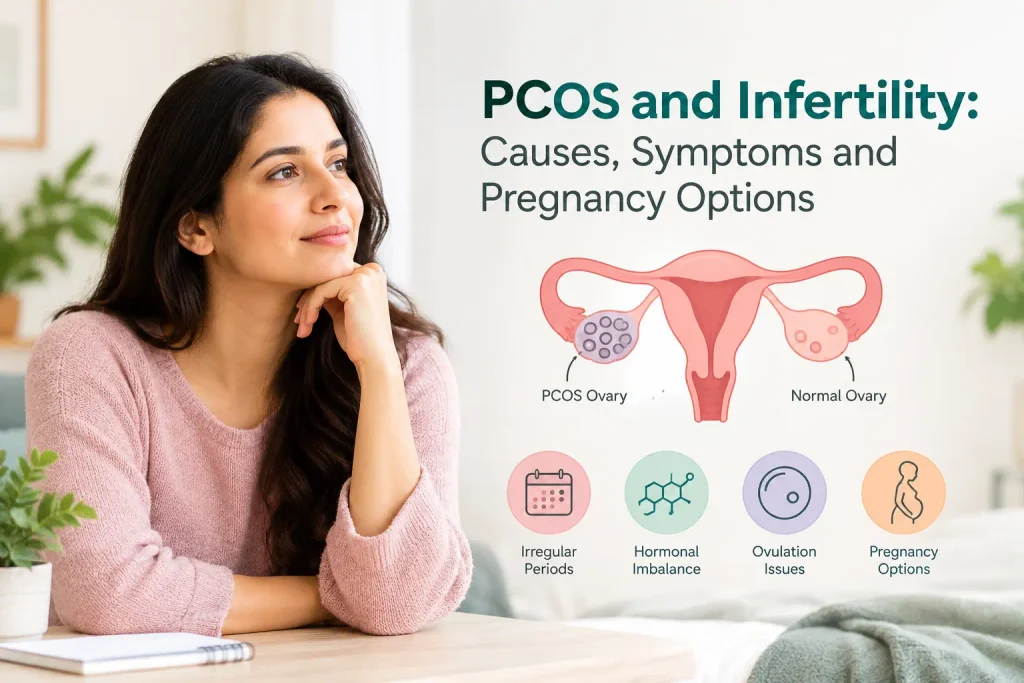
What Is PCOS?
Polycystic Ovary Syndrome, commonly called PCOS, is a hormonal and metabolic condition that can affect how the ovaries function. Women with PCOS may have higher-than-usual levels of androgens, sometimes called male-type hormones, and may not ovulate regularly.
Despite its name, PCOS does not simply mean that a woman has cysts on her ovaries. The small structures often seen on an ultrasound are usually immature follicles. Their presence alone does not establish a PCOS diagnosis.
PCOS can affect women differently. Some experience irregular periods, acne, or unwanted facial hair, while others primarily experience fertility difficulties or metabolic concerns.
Common features of PCOS include:
- Irregular, infrequent, or absent menstrual periods
- Irregular or absent ovulation
- Higher androgen levels or symptoms such as excess facial hair
- Acne or oily skin
- Thinning hair on the scalp
- Difficulty managing weight in some individuals
- Insulin resistance in some women
- Challenges with conception
Not every woman with PCOS experiences all these symptoms. A healthcare professional assesses the overall clinical picture before making a diagnosis.
How Are PCOS and Infertility Connected?
PCOS is one of the common causes of ovulatory infertility. Ovulatory infertility occurs when an egg is not released regularly or predictably from an ovary.
During a typical menstrual cycle, hormones help a follicle develop and release a mature egg. After ovulation, hormonal changes prepare the body for a possible pregnancy.
In women with PCOS, hormonal imbalances may interfere with this process. A follicle may not mature fully, and ovulation may occur irregularly or not at all during some cycles.
The following factors help explain the connection between PCOS and infertility.
1. Irregular Ovulation
Irregular ovulation is a major reason PCOS can make conception more difficult. If ovulation occurs only occasionally, there may be fewer opportunities to conceive during a given period.
Women with irregular cycles may also find it difficult to predict when they are most fertile. Medical evaluation can help determine whether ovulation is occurring.
2. Hormonal Imbalances
Some women with PCOS have elevated androgen levels. Hormonal changes can interfere with normal follicle development and ovulation.
Hormone levels vary between individuals, so treatment should be based on appropriate clinical assessment rather than symptoms alone.
3. Insulin Resistance
Insulin helps regulate blood glucose. Some women with PCOS have insulin resistance, meaning the body does not respond to insulin as effectively as it should.
The body may compensate by producing more insulin. In some women, elevated insulin levels can contribute to increased androgen production and irregular ovulation.
Insulin resistance can occur in women of different body sizes, so PCOS should not be judged by weight alone.
4. Irregular Menstrual Cycles
Infrequent periods may indicate that ovulation is not happening regularly. This can reduce the number of opportunities for conception and make it harder to estimate the fertile window.
Very infrequent periods also deserve medical attention because prolonged gaps between periods can increase the risk of excessive thickening of the uterine lining.
5. Other Fertility Factors
PCOS is not the only possible cause of difficulty conceiving. Age, sperm health, fallopian tube problems, endometriosis, and other medical conditions can also affect fertility.
A comprehensive fertility evaluation is important rather than assuming that PCOS explains every difficulty with conception.
Common Symptoms of PCOS
PCOS symptoms may begin during adolescence or become more noticeable later. Some women discover they have PCOS only when they seek help for irregular periods or difficulty becoming pregnant.
1. Irregular Periods
Menstrual cycles that are consistently irregular, very long, or absent may indicate irregular ovulation. This is one of the most recognized symptoms associated with PCOS.
2. Excess Facial or Body Hair
Higher androgen levels may cause unwanted hair growth on the chin, upper lip, chest, abdomen, or other areas. The severity varies between individuals.
3. Acne and Oily Skin
Hormonal changes may increase oil production and contribute to persistent acne, particularly around the jawline, chin, and lower face.
4. Scalp Hair Thinning
Some women experience thinning hair on the scalp associated with increased androgen activity. Other causes of hair loss, including nutritional deficiencies and thyroid conditions, may also need consideration.
5. Weight Changes
Some women with PCOS experience weight gain or find weight management more difficult. Others maintain a stable weight. Weight alone cannot confirm or rule out PCOS.
6. Difficulty Getting Pregnant
Women who ovulate irregularly may take longer to conceive. However, difficulty conceiving is not necessary for a PCOS diagnosis, and many women with PCOS have successful pregnancies.
7. Skin Changes
Darkened, velvety patches of skin, often around the neck, armpits, or groin, may be associated with insulin resistance. A healthcare professional can assess these changes and recommend appropriate tests.
What Causes PCOS?
The exact cause of PCOS is not fully understood. Research suggests that several biological and genetic factors may contribute to its development.
Genetic Factors
PCOS often occurs in families. Having a close relative with PCOS may increase the likelihood of developing the condition, although genetics do not determine every outcome.
Hormonal Changes
Differences in the regulation of reproductive hormones can interfere with follicle development and ovulation. Elevated androgen levels are a key feature in many women with PCOS.
Insulin Resistance
Insulin resistance can contribute to hormonal changes in some women. However, not every woman with PCOS has insulin resistance, and it is not the only mechanism involved.
Metabolic Factors
Metabolic health, sleep, physical activity, and other individual factors may influence the symptoms and long-term health risks associated with PCOS. These factors do not mean that PCOS is caused by a lack of discipline or by body weight alone.
Can You Get Pregnant With PCOS?
Yes. Many women with PCOS become pregnant naturally, while others benefit from medical treatment to support ovulation.
The likelihood of pregnancy depends on several factors, including age, the frequency of ovulation, sperm health, fallopian tube function, and other reproductive health conditions.
Women with regular ovulation may conceive without fertility medication. Those who ovulate irregularly may need treatment to help an egg mature and release.
A PCOS diagnosis should not be interpreted as a guarantee of infertility. Equally, having PCOS should not be a reason to delay evaluation when pregnancy is taking longer than expected.
Women with absent periods, very irregular cycles, or known fertility concerns should consider consulting a qualified healthcare professional early.
Pregnancy Options for Women With PCOS
Treatment depends on individual symptoms, reproductive goals, medical history, and fertility test results. A gynecologist or fertility specialist can help identify an appropriate approach.
1. Lifestyle Changes
Lifestyle measures can support general health and may improve metabolic health and ovulation in some women with PCOS.
Helpful measures may include:
- Eating balanced meals with vegetables, fruits, whole grains, protein, and healthy fats
- Choosing high-fibre carbohydrate sources where appropriate
- Participating in regular physical activity
- Maintaining a consistent sleep schedule
- Avoiding smoking and limiting alcohol when trying to conceive
- Seeking support for stress management
For women who have excess weight and want to lose weight, a sustainable, individualized approach may improve some PCOS symptoms. However, weight loss is not a requirement for every woman, and people at any body size can benefit from healthy habits.
Lifestyle changes can support treatment, but they should not replace medical assessment when ovulation is absent or conception is delayed.
2. Ovulation-Induction Medication
When PCOS causes anovulatory infertility and no other major infertility factor is identified, medication may help stimulate ovulation.
Letrozole is commonly recommended as the first-line pharmacological treatment for ovulation induction in many women with PCOS-related anovulatory infertility.
Other medicines, including clomiphene citrate, may be considered in selected circumstances. Metformin may be appropriate for certain women, particularly when metabolic factors are relevant, but it is not a universal fertility treatment.
These medications require professional supervision. They should not be taken without a prescription and appropriate monitoring.
3. Metformin
Metformin is a medicine used to improve glucose regulation. It may be recommended for selected women with PCOS, particularly those with metabolic concerns.
In some circumstances, metformin can help improve menstrual regularity or ovulation. However, its suitability for improving fertility depends on the individual situation, and it is not necessarily the most effective standalone ovulation-induction option.
A clinician can explain whether metformin is appropriate and whether additional treatment is needed.
4. Intrauterine Insemination (IUI)
Intrauterine insemination involves placing prepared sperm into the uterus around the time of ovulation. It may be considered in selected fertility situations, such as certain cases of unexplained infertility or mild male-factor infertility.
IUI is not automatically required for PCOS. If the main issue is irregular ovulation, a clinician may first recommend ovulation induction, depending on the couple’s fertility evaluation.
5. In Vitro Fertilization (IVF)
In vitro fertilization is a fertility treatment in which eggs are collected from the ovaries and fertilized with sperm in a laboratory. An embryo may then be transferred to the uterus.
IVF may be considered when other treatments have not been successful, when additional infertility factors exist, or when a specialist identifies another reason for using it.
Women with PCOS may respond strongly to ovarian stimulation, which can increase the risk of ovarian hyperstimulation syndrome (OHSS). Fertility specialists can use individualized medication protocols and monitoring to reduce this risk.
IVF can offer a pregnancy option for some women with PCOS, but success rates vary with age, embryo factors, clinic-specific outcomes, and other medical considerations.
6. Other Specialist Treatments
If first-line treatment does not lead to ovulation or pregnancy, a fertility specialist may discuss other options, such as gonadotropin injections or, in selected cases, laparoscopic ovarian surgery.
These approaches have specific risks and require careful consideration. Gonadotropins can increase the risk of multiple pregnancy and ovarian hyperstimulation, so monitoring is essential.
The best treatment is the one that fits the individual’s diagnosis, fertility goals, and medical circumstances.
Foods and Nutrition for Women With PCOS
There is no single diet that cures PCOS or guarantees pregnancy. A balanced, sustainable eating pattern may support metabolic health and overall well-being.
Foods to Include
Consider a varied diet containing:
- Vegetables and whole fruits
- Whole grains such as oats and whole-wheat products
- Protein sources such as eggs, beans, lentils, fish, or lean meat
- Nuts and seeds
- Unsaturated fats such as olive oil
- Dairy products or suitable fortified alternatives, according to individual needs
Combining fibre-rich carbohydrates with protein and healthy fats may help support steadier blood glucose levels.
Foods to Limit
Depending on individual health needs, it may be useful to reduce frequent consumption of sugary drinks, highly refined snack foods, and heavily processed foods that provide limited nutritional value.
There is no need to eliminate all carbohydrates or follow an extreme diet. Restrictive eating plans may be difficult to sustain and can lead to nutritional gaps.
Are Supplements Helpful for PCOS Fertility?
Some supplements are promoted for hormonal balance or fertility, but evidence differs considerably between products. Inositol, for example, has been studied in PCOS, yet evidence for its effects on ovulation, pregnancy, and live birth remains limited or uncertain.
Folic acid is generally recommended before conception to help reduce the risk of neural tube defects. The appropriate dose depends on individual circumstances and local clinical guidance.
Discuss supplements with a healthcare professional, particularly when taking prescription medicines or trying to conceive. Supplements should not replace established fertility treatment.
How Is PCOS Diagnosed?
PCOS is diagnosed through a clinical assessment that considers symptoms, medical history, examination findings, and appropriate tests.
In adults, diagnosis generally requires at least two of the following features, after excluding other possible causes:
- Irregular or absent ovulation.
- Clinical or biochemical evidence of elevated androgen levels.
- Polycystic ovarian morphology on ultrasound, or an accepted alternative assessment in appropriate circumstances.
An ultrasound is not always necessary when the other diagnostic criteria are clearly met. The diagnostic approach also differs in adolescents, for whom stricter criteria are used.
A healthcare professional may recommend:
- A review of menstrual history and symptoms
- Blood tests to assess androgen levels
- Tests to exclude conditions such as thyroid dysfunction or elevated prolactin
- Blood glucose or other metabolic assessments
- Pelvic ultrasound when indicated
- Fertility investigations, such as semen analysis or assessment of fallopian tube patency, when appropriate
Not every test is needed for every patient. Testing should be guided by the clinical situation.
When Should You See a Fertility Specialist?
Consider seeking medical advice if you have PCOS and are planning pregnancy, especially if your periods are absent or significantly irregular.
General fertility guidance commonly recommends evaluation after 12 months of regular unprotected intercourse for women younger than 35, after six months for women aged 35 or older, and sooner for women over 40 or those with known fertility concerns.
These timelines are not a reason to delay care when periods are absent or ovulation is unlikely to be occurring. Earlier evaluation may be appropriate.
A fertility assessment can help determine whether PCOS is the main issue or whether other factors need treatment.
Pregnancy Risks Associated With PCOS
Many women with PCOS have healthy pregnancies. However, PCOS is associated with an increased risk of certain pregnancy complications, including gestational diabetes, high blood pressure, pre-eclampsia, and preterm birth.
The level of risk varies depending on individual health, metabolic factors, age, and other circumstances.
Before pregnancy, a healthcare professional may review blood pressure, glucose regulation, medications, folic acid supplementation, and other relevant health factors.
During pregnancy, regular antenatal care and any recommended screening can help identify concerns early.
PCOS does not mean that these complications will necessarily occur. Appropriate care can help support maternal and fetal health.
Frequently Asked Questions About PCOS and Infertility
1. Does PCOS always cause infertility?
No. PCOS can interfere with regular ovulation, but many women with PCOS conceive naturally. Others may need medication or fertility treatment.
2. Can I get pregnant naturally with PCOS?
Yes. Natural conception is possible, especially when ovulation occurs. Women with irregular periods should seek advice to understand their ovulation patterns and reproductive health.
3. What is the best treatment for PCOS-related infertility?
Treatment depends on the cause of infertility. Letrozole is commonly recommended as first-line ovulation-induction medication for many women with PCOS-related anovulatory infertility when no other major infertility factor is present.
4. Can PCOS be cured permanently?
There is currently no permanent cure for PCOS. However, symptoms and associated health risks can often be managed through individualized lifestyle measures, medication, and appropriate follow-up.
5. Can a woman with PCOS have regular periods?
Yes. Some women with PCOS have regular periods, while others have irregular or absent periods. Regular bleeding does not always confirm ovulation, so assessment may be useful when fertility is a concern.
6. Does PCOS affect egg quality?
PCOS primarily affects follicle development and ovulation. Egg quality is influenced by several factors, particularly age, and cannot be determined from a PCOS diagnosis alone.
7. Is IVF necessary for every woman with PCOS?
No. IVF is only one of several options. Depending on the diagnosis, lifestyle support and ovulation-induction treatment may be appropriate before more advanced fertility procedures are considered.
8. Can losing weight improve fertility in PCOS?
For some women who have excess weight, individualized weight management may improve metabolic health and ovulation. However, PCOS also affects women who are not overweight, and weight loss is not a universal requirement for conception.
9. Can PCOS cause miscarriage?
PCOS is associated with an increased risk of some pregnancy complications, and studies have reported an association with miscarriage. Individual risk varies, and PCOS does not mean that miscarriage will occur. A clinician can help assess personal risk factors.
10. When should I consult a doctor about PCOS and infertility?
Seek advice if you have absent or very irregular periods, are planning pregnancy with known PCOS, or have been trying to conceive without success. Earlier evaluation may be appropriate when ovulation problems or other fertility concerns are known.
Conclusion
PCOS and infertility are closely connected because hormonal changes and irregular ovulation can make conception more difficult for some women. However, PCOS does not mean that pregnancy is impossible.
Recognizing symptoms, obtaining an appropriate diagnosis, maintaining supportive health habits, and discussing evidence-based fertility options with a qualified healthcare professional can help women plan their next steps.
Treatment may range from lifestyle support and ovulation-induction medication to selected fertility procedures, depending on the underlying cause of infertility. Because each woman has different health needs, personalized medical guidance is essential.
For additional medical information, readers can refer to the Government of India’s PCOS clinical guidelines for guidance on the diagnosis and management of Polycystic Ovarian Syndrome.
Medical disclaimer: This article is for educational purposes only and does not replace professional medical advice, diagnosis, or treatment. Consult a qualified healthcare professional for personalized recommendations about PCOS, fertility, medication, and pregnancy planning.
Read Other Article : How Stress Affects Sleep: Causes, Symptoms & 8 Natural Solutions