
heartburn anxiety or heart attack
Chest discomfort can be frightening, especially when you are unsure whether it is heartburn, anxiety, or a heart attack. These conditions can sometimes produce overlapping symptoms, including chest pain, pressure, shortness of breath, sweating, nausea, and a racing heartbeat.
However, they are not the same, and a heart attack can be life-threatening.
The most important rule is simple: if you have new, severe, unexplained, or persistent chest pain, do not try to diagnose it yourself. Seek emergency medical care.
Heartburn is usually related to acid reflux, while anxiety can trigger physical symptoms through the body’s stress response. A heart attack occurs when blood flow to part of the heart muscle becomes blocked and requires urgent medical attention.
This guide explains common differences between heartburn, anxiety, and heart attack symptoms, but it cannot replace an examination by a healthcare professional.
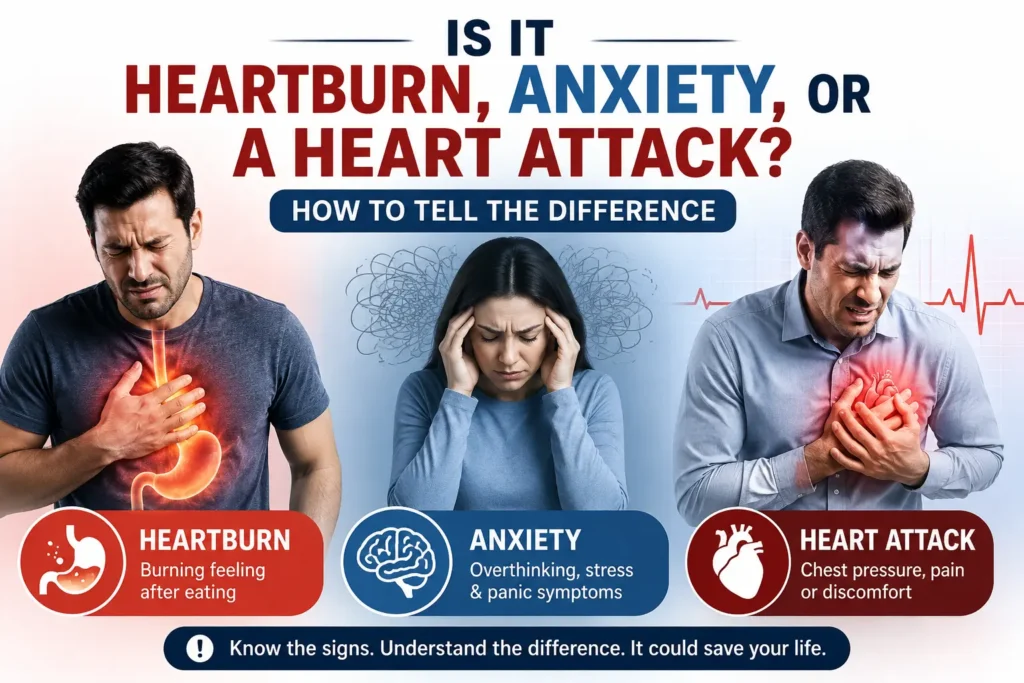
Heartburn vs. Anxiety vs. Heart Attack: Quick Comparison
| Feature | Heartburn | Anxiety/Panic Attack | Heart Attack |
|---|---|---|---|
| Common sensation | Burning discomfort | Tightness, racing heart, chest discomfort | Pressure, squeezing, heaviness |
| Location | Often behind breastbone | Chest or generalized discomfort | Center or left side of chest |
| After meals | Common | Not necessarily | Not usually related to meals |
| Burning sensation | Common | Possible | Possible |
| Shortness of breath | Sometimes | Common | Common |
| Sweating | Less typical | Can occur | Common warning sign |
| Nausea | Possible | Possible | Possible |
| Pain spreading to arm/jaw/back | Uncommon | Uncommon | Can occur |
| Trigger | Large meals, lying down | Stress, fear, panic | Reduced blood flow to heart |
| Emergency? | Usually not | Usually not, but symptoms can mimic emergencies | Yes |
This table is only a general guide. Symptoms can vary considerably from person to person.
What Does Heartburn Feel Like?
Heartburn is a common symptom of acid reflux. It happens when stomach contents move upward into the esophagus, irritating its lining.
Despite its name, heartburn does not usually mean there is a problem with the heart.
Common symptoms of heartburn include:
- Burning sensation behind the breastbone
- Discomfort that may move upward toward the throat
- Sour or acidic taste in the mouth
- Regurgitation of food or stomach acid
- Belching
- Symptoms after eating
- Symptoms that become worse when lying down or bending over
Heartburn may occur after eating a large meal, consuming certain trigger foods, or lying down shortly after eating.
Some people describe heartburn as chest pain, which is one reason it can sometimes be confused with a heart problem.
When heartburn may be more likely
Heartburn is more likely when chest burning:
- Occurs after a meal
- Gets worse when lying down
- Improves after sitting upright
- Is accompanied by an acidic taste
- Is associated with regurgitation
However, these features do not reliably rule out a heart attack.
What Does Anxiety or a Panic Attack Feel Like?
Anxiety activates the body’s stress response. During intense anxiety or a panic attack, the body releases stress hormones that can cause very real physical symptoms.
A person may experience chest tightness, rapid heartbeat, dizziness, sweating, trembling, or difficulty breathing.
Common physical symptoms of anxiety include:
- Rapid or pounding heartbeat
- Chest tightness
- Shortness of breath
- Sweating
- Trembling
- Dizziness or lightheadedness
- Nausea
- Tingling or numbness
- Feeling unusually hot or cold
- A sense of impending danger
- Difficulty concentrating
A panic attack can begin suddenly and may feel extremely intense.
Some people become convinced they are having a heart attack because the symptoms can be so physical.
Anxiety-related chest symptoms
Anxiety-related chest discomfort may occur during periods of significant stress, fear, worry, or panic. It may also be accompanied by rapid breathing and a racing heartbeat.
However, you should not assume that chest pain is caused by anxiety simply because you feel stressed.
A heart attack can also cause anxiety, fear, sweating, and a racing heartbeat.
What Does a Heart Attack Feel Like?
A heart attack, medically called a myocardial infarction, occurs when blood flow to part of the heart muscle is significantly reduced or blocked.
Without adequate blood flow, heart muscle can become damaged.
The symptoms can vary. Not everyone experiences the dramatic “crushing chest pain” often shown in movies.
Common heart attack warning signs include:
- Pressure, squeezing, fullness, or pain in the center of the chest
- Chest discomfort lasting several minutes or coming and going
- Pain or discomfort spreading to one or both arms
- Discomfort in the shoulder, back, neck, jaw, or upper abdomen
- Shortness of breath
- Cold sweating
- Nausea or vomiting
- Unusual weakness or fatigue
- Lightheadedness or fainting
Some people may experience only mild discomfort.
Women, older adults, and people with diabetes may sometimes have less typical symptoms.
How Can You Tell the Difference Between Heartburn and a Heart Attack?
There is no completely reliable way to distinguish them based only on how the pain feels.
That is because both heartburn and heart attacks can cause chest discomfort, nausea, sweating, and a burning sensation.
Signs that may suggest heartburn
Chest discomfort may be more consistent with heartburn if it:
- Begins after eating
- Is accompanied by acid taste or regurgitation
- Gets worse when lying down
- Improves when sitting upright
- Feels like burning behind the breastbone
But remember: these clues cannot safely rule out a heart attack.
Signs that may suggest a heart attack
A heart problem becomes more concerning when chest discomfort:
- Feels like pressure, squeezing, heaviness, or fullness
- Is persistent or repeatedly returns
- Occurs with physical activity
- Spreads to the arm, jaw, back, neck, or shoulder
- Is accompanied by shortness of breath
- Occurs with cold sweating
- Causes nausea, weakness, or dizziness
If these symptoms are new or unexplained, seek emergency medical attention.
Can Anxiety Cause Chest Pain?
Yes. Anxiety can cause genuine chest pain and discomfort.
When you are anxious, your body enters a heightened state of alertness. Your heart rate and breathing can increase, and muscles around the chest can become tense.
Rapid breathing can also contribute to dizziness, tingling, and a feeling that you cannot get enough air.
However, anxiety should not automatically be blamed for chest pain.
If you have never experienced these symptoms before, or the symptoms are severe, unusual, persistent, or associated with other heart attack warning signs, medical evaluation is important.
Can a Heart Attack Feel Like Heartburn?
Yes.
A heart attack can sometimes feel like indigestion, heartburn, pressure, fullness, or discomfort in the upper abdomen.
This is one reason it can be dangerous to assume that burning chest discomfort is simply acid reflux.
If you experience unexplained chest discomfort—particularly when it is accompanied by sweating, shortness of breath, nausea, weakness, or pain spreading to another part of the body—treat it as a potential emergency.
When Should You Call Emergency Services?
Seek emergency medical care immediately if you experience new, severe, persistent, or unexplained chest pain or pressure, particularly if it occurs with:
- Difficulty breathing
- Cold sweating
- Fainting or severe dizziness
- Nausea or vomiting
- Pain spreading to the arm, shoulder, back, neck, or jaw
- Severe weakness
- A feeling that something is seriously wrong
Do not wait for symptoms to become unbearable.
If you think you may be having a heart attack, call your local emergency medical service rather than driving yourself to the hospital, when possible.
Emergency professionals can begin assessment and treatment sooner.
What Should You Do If You Are Unsure?
If you cannot tell whether your symptoms are caused by heartburn, anxiety, or a heart attack, it is safer to get medical help.
Do not rely on:
- Searching symptoms online
- Waiting for pain to disappear
- Assuming it is anxiety
- Assuming it is indigestion
- Taking medication simply to see whether the symptoms improve
A healthcare professional may use your symptoms, medical history, physical examination, an electrocardiogram (ECG/EKG), blood tests, and other investigations to determine what is happening.
Why Chest Pain Should Never Be Ignored
Chest pain has many possible causes.
Besides heartburn, anxiety, and heart attack, chest discomfort can be associated with other conditions involving the heart, lungs, muscles, nerves, or digestive system.
Some causes are minor, while others require urgent treatment.
The challenge is that symptoms can overlap.
For example, anxiety can cause a racing heartbeat and chest tightness, while a heart attack can also cause anxiety and a racing heartbeat.
Similarly, heartburn can cause burning chest discomfort, but a heart attack can sometimes produce a burning or indigestion-like sensation.
That is why the safest approach is to seek professional evaluation when symptoms are concerning or unfamiliar.
Heart Attack Risk Factors to Know
Understanding cardiovascular risk factors can help you recognize when chest symptoms deserve particular attention.
Common risk factors include:
- Smoking or tobacco use
- High blood pressure
- High cholesterol
- Diabetes
- Obesity
- Physical inactivity
- Increasing age
- Family history of cardiovascular disease
- Previous heart disease
- Certain lifestyle and dietary factors
Having risk factors does not mean that chest pain is definitely a heart attack. Likewise, people without obvious risk factors can still experience serious heart problems.
How to Reduce Heart Disease Risk
While not every heart attack can be prevented, many cardiovascular risk factors can be addressed.
1. Stay physically active
Regular physical activity supports cardiovascular health. Choose activities appropriate for your fitness level and health status.
2. Eat a balanced diet
Focus on vegetables, fruits, whole grains, legumes, nuts, and other nutrient-rich foods. Limit excessive amounts of saturated fat, added sugar, and highly processed foods.
3. Avoid tobacco
Smoking significantly increases cardiovascular risk. Quitting can improve heart and overall health.
4. Manage blood pressure
High blood pressure often has no obvious symptoms. Regular monitoring and appropriate treatment can help reduce cardiovascular risk.
5. Manage cholesterol
Regular health checks can help identify high cholesterol and determine whether lifestyle changes or treatment are needed.
6. Manage stress
Stress-management techniques such as regular physical activity, adequate sleep, relaxation exercises, and professional support can be useful for managing anxiety and stress.
7. Maintain a healthy weight
A healthy weight can support blood pressure, blood sugar, cholesterol, and overall cardiovascular health.
Frequently Asked Questions
Is heartburn or a heart attack more likely to cause burning chest pain?
Heartburn commonly causes a burning sensation behind the breastbone. However, a heart attack can also cause burning or indigestion-like discomfort. Therefore, burning chest pain alone cannot safely distinguish the two.
How long does heartburn usually last?
Heartburn duration varies. It may come and go and can be associated with meals or lying down. Persistent or unusual chest discomfort should not automatically be attributed to heartburn.
Can anxiety cause chest pain for hours?
Anxiety can cause prolonged or recurring chest discomfort, particularly during ongoing stress. However, chest pain lasting a long time should be evaluated rather than automatically blamed on anxiety.
Can a heart attack feel like gas or indigestion?
Yes. Some heart attacks can produce symptoms resembling indigestion, gas, or heartburn. Unexplained chest or upper-abdominal discomfort accompanied by other warning signs requires urgent medical attention.
Can heartburn cause shortness of breath?
Severe reflux symptoms can sometimes be associated with breathing discomfort, but shortness of breath with chest pain should be taken seriously because it can also be a heart attack symptom.
Can anxiety increase heart rate?
Yes. Anxiety and panic can activate the body’s stress response, causing a faster or pounding heartbeat. However, a fast heartbeat with chest pain, fainting, severe shortness of breath, or other concerning symptoms requires medical evaluation.
When should chest pain be considered an emergency?
New, severe, persistent, or unexplained chest pain—especially when accompanied by shortness of breath, sweating, nausea, fainting, weakness, or pain spreading to the arm, back, neck, shoulder, or jaw—should be treated as an emergency.
Final Thoughts
Knowing the difference between heartburn, anxiety, and a heart attack can help you respond appropriately when chest symptoms occur. Heartburn is commonly associated with acid reflux, while anxiety can cause chest tightness, rapid heartbeat, and other physical symptoms.
A heart attack, however, is a medical emergency and can sometimes resemble heartburn or anxiety.
Because symptoms can overlap, do not attempt to diagnose serious chest pain on your own. If symptoms are new, severe, unexplained, persistent, or accompanied by warning signs such as shortness of breath, sweating, nausea, fainting, or pain spreading to the arm or jaw, seek emergency medical care immediately.
Medical Disclaimer: This article is for general educational purposes only and is not a substitute for professional medical advice, diagnosis, or treatment. If you are experiencing chest pain or believe you may be having a heart attack, seek emergency medical assistance immediately.
About Krone Biocare (A WHO-GM Certified Third Party Manufacturing Company)
Krone Biocare is a trusted pharmaceutical, nutraceutical, and Ayurvedic third-party manufacturing company in India, offering quality-focused manufacturing solutions for pharmaceutical brands and businesses. We provide customized formulations, reliable production, attractive packaging, and regulatory support to help businesses build and expand their product portfolios. With a focus on quality, innovation, and customer satisfaction, Krone Biocare aims to be a dependable manufacturing partner for growing healthcare brands.
heartburn anxiety or heart attack, heartburn anxiety or heart attack, heartburn anxiety or heart attack, heartburn anxiety or heart attack, heartburn anxiety or heart attack, heartburn anxiety or heart attack, heartburn anxiety or heart attack, heartburn anxiety or heart attack, heartburn anxiety or heart attack, heartburn anxiety or heart attack, heartburn anxiety or heart attack, heartburn anxiety or heart attack, heartburn anxiety or heart attack, heartburn anxiety or heart attack,heartburn anxiety or heart attack, heartburn anxiety or heart attack, heartburn anxiety or heart attack, heartburn anxiety or heart attack, heartburn anxiety or heart attackheartburn anxiety or heart attack,heartburn anxiety or heart attack, heartburn anxiety or heart attack, heartburn anxiety or heart attack, heartburn anxiety or heart attack