The Smart Way to Launch Your Beauty Brand: The Ultimate Guide to Third-Party Cosmetic Manufacturing
Have you ever dreamed of launching your own skincare serum, organic shampoo, or matte lipstick brand? The beauty industry is booming, and new brands are entering the market every single day. But what is the biggest fear when starting out? “How will I set up a factory? How will I afford all the machinery?”
The good news is, in today’s world, you don’t need a factory at all. Enter Third-Party Cosmetic Manufacturing (also known as Contract Manufacturing).
Let’s break down what this concept is and why partnering with an established manufacturer like Krone Biocare is the ultimate game-changer for your new beauty business.
What is Third-Party Cosmetic Manufacturing?
In simple terms, when you outsource the production of your brand’s products (like face washes, lotions, or makeup) to a company that already has a fully equipped manufacturing plant, an R&D lab, and all the necessary government licenses, it is called third-party manufacturing.
Your primary focus remains on the product idea, brand name, and marketing. From formulating the chemical composition to bulk production and packaging, the manufacturer handles the rest. If you check the back of most beauty products today, you will see a label that reads: “Marketed by [Your Brand], Manufactured by [KRONE BIOCARE]”.
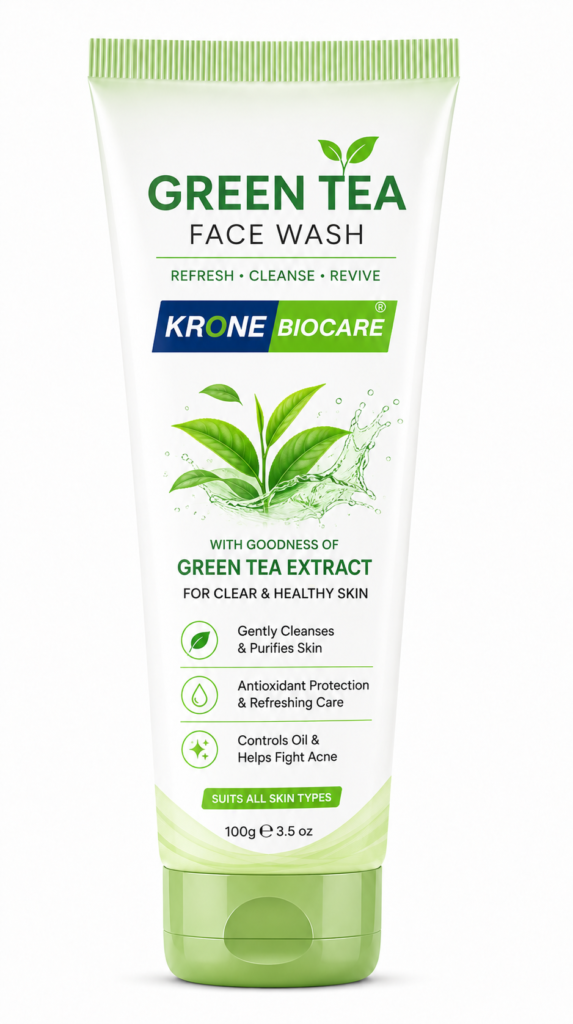
Nature’s Touch for Radiant Skin
- Face Wash
- Scrub
- Face Mask
- Peel off Mask
- Face Serum
- Face Oils
- Day Cream
- Night Cream
- Night Gel
- Cleansing Balm
- Oil Free Moisturiser
- Ubtan Face Mask
- Kumkumadi Oil
- Kumkumadi Face Cream
Why Should a New Brand Choose Third-Party Manufacturing?
1. Zero Setup Cost (Save Your Capital) Setting up a cosmetic factory requires massive capital investment for land, machinery, and regulatory approvals. With third-party manufacturing, you bypass these hurdles and can invest all that saved capital directly into branding, marketing, and customer acquisition.
2. R&D and Expert Formulators These manufacturing facilities employ top-tier chemists and dedicated Research & Development (R&D) teams. If your vision is to create a ‘Vegan, Paraben-Free Vitamin C Serum,’ they will leverage their years of expertise to create a highly effective, stable, and safe formula for you.
3. Premium Quality and Certifications Reputable third-party manufacturers like Krone Biocare are already GMP (Good Manufacturing Practices) and ISO certified. This guarantees that your product is being manufactured in a hygienic environment according to strict international quality standards.
4. Low MOQ (Minimum Order Quantity) No founder wants to manufacture hundreds of thousands of units right out of the gate. Many modern manufacturers offer low MOQs (such as 500 or 1,000 pieces per SKU), allowing you to test the market with minimal financial risk.
How Does the Process Work? (Step-by-Step)
- Ideation & Briefing: You share your vision with the manufacturer—detailing the texture, scent, target audience, and key ingredients (like Niacinamide or Hyaluronic Acid) you want in the product.
- Sampling & Testing: The manufacturer’s lab creates a few prototype samples. You test them out and request any necessary tweaks.
- Packaging Selection: You finalize the design, aesthetic, and label for the primary packaging (bottle, tube, or jar).
- Approval & Production: Once both the formula and the packaging are locked in, the bulk production phase begins.
- Delivery: The finished, ready-to-sell products are shipped directly to your warehouse or fulfillment center.
Pro-Tips: How to Choose the Right Manufacturer?
There are thousands of manufacturers in the market, but choosing the right long-term partner is critical for your brand’s reputation. This is exactly why many successful brands turn to trusted industry leaders like Krone Biocare. When evaluating your options, keep these criteria in mind:
- Always verify their Licenses and Certifications (such as WHO and GMP compliance).
- Ask to see their Past Portfolio to know which other successful brands they have worked with.
- Clarify the Lead Time (the exact number of days it will take them to manufacture and deliver the product after you place an order).
- Ensure their production practices align with your brand values—for instance, confirming they are strictly Cruelty-Free or use sustainable processes.